

Bala Devi Chandrashekhar
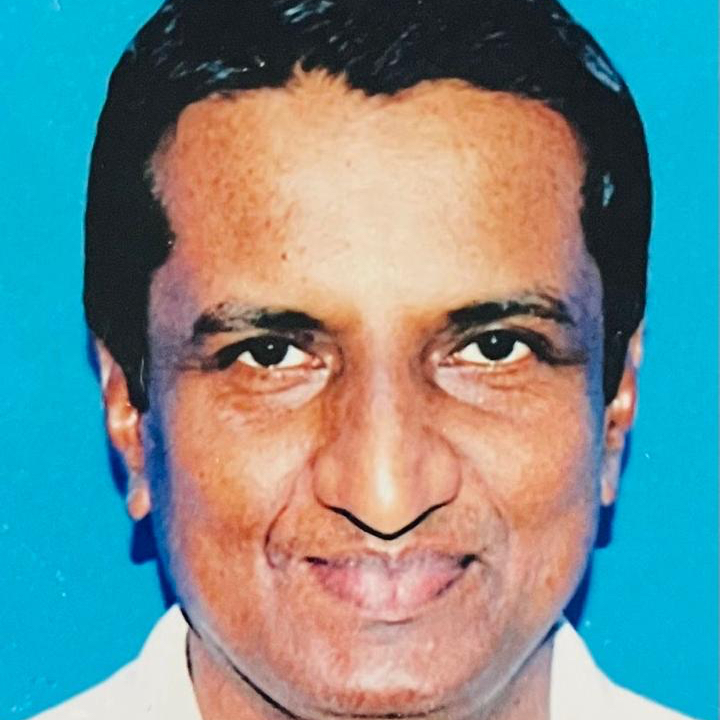
Bala Devi Chandrashekar has quietly become one of the most compelling global voices in Bharatanatyam today—a dancer-scholar who treats the classical form not just as performance, but as a way of thinking about the world. A choreographer, researcher, artistic director, and Professor of Practice, she has spent decades showing how this ancient South Indian dance can carry complex ideas about philosophy, ethics, and human consciousness into modern spaces—from university classrooms to UNESCO and the Paris Olympics. With over 300 performances across 37 countries, her work has taken Indian classical dance far beyond its traditional geographies and audiences.
At the heart of her work is a framework she calls “Artistic Intelligence,” where classical art is seen as a training ground for the mind: a discipline that shapes memory, focus, analytical ability, and emotional depth. In her view, Bharatanatyam is not just about beauty or devotion; it is a structured system that can generate knowledge and sharpen the way we perceive reality.

ROOTED IN A RIGOROUS LINEAGE
Bala Devi’s practice is anchored in a demanding lineage. A senior disciple of the legendary Dr. Padma Subrahmanyam works within the tradition, and follows a research-based style. Her choreography is built like an academic project. She consults historians, Sanskrit scholars, philosophers, and musicologists, grounding every choice—hand gesture, footwork pattern, stage geometry—in scriptural and aesthetic sources rather than surface-level dramatization. The result is work that can speak about non-duality, cosmic order, and devotion with unusual clarity, using the body as the primary instrument of argument.
A RARE PRESENCE ON GLOBAL PLATFORMS
Few Indian classical dancers have taken Bharatanatyam into as many international spaces with such consistency. Bala Devi has performed and presented in more than 37 countries, building a performance history of over 300 shows at cultural festivals, museums, universities, and diplomatic venues. Her appearances at UNESCO Headquarters in Paris—most notably around her Brihadeeswara Temple-focused work—have underlined Bharatanatyam’s place within conversations on world heritage and civilizational knowledge. In 2024, she broke fresh ground as the only Bharatanatyam artist featured at the Paris Olympics cultural program, performing at India House before an audience of diplomats, officials, and global visitors. Her presentation there wove together the cosmic dance of Shiva, the Ardhanareeshvara concept of masculine–feminine balance, and the idea of “one earth, one family”—using a traditional solo form to deliver a message of cultural diplomacy and shared human values.
REFRAMING THE DIVINE FEMININE
A strong thread running through her repertoire is the centrality of women and the divine feminine. Bala Devi returns repeatedly to women-centered and Shakti-oriented narratives, not just to retell them, but to restore their philosophical weight. In works like “Maa – The Eternal Truth,” she links the mother figure to Mother Earth, climate crisis, and ecological responsibility, drawing on classical texts to make environmental consciousness feel sacred as well as ethical. Other productions, including those on Padmavati or Tripura, treat female figures and forms of Shakti not as ornamental presences but as carriers of cosmic intelligence and transformative power. Across these works, the heroine is thinker, force, and principle—not just character.
TURNING TEMPLES, EPICS, AND GEOGRAPHIES INTO MOVING IDEAS
Bala Devi’s twelve thematic productions read like a catalogue of Indian civilizational thought, each framed through the lens of Artistic Intelligence. “Brihadeeswara – Form to Formless” translates the architecture and sacred geometry of the 1,000-year old Brihadeeswara Temple in Thanjavur into movement. Works on Karna and the Uddhava Gita probe moral conflict, fate, detachment, and liberation, turning epic material into intimate ethical inquiry. “Maa – The Eternal Truth” and “Mauli – Timeless Traditions” connect devotional traditions—from Andal to the Varkari pilgrimage—to present questions of faith, duty, and ecological balance in a contemporary register. In “FujiHima – Eternal Peaks,” she moves beyond India’s borders, staging a conversation between Indian and Japanese sacred landscapes, suggesting that the search for transcendence is shared across cultures. In each of these, structure is as important as story: rhythm cycles, spatial patterns, and motif repetitions are designed to function like arguments, slowly revealing layers of meaning. Other notable works include NandanarCharithram, Uddhava Gita- Lord Krishna's last message, Triupura - Divine Feminine, Traditional margam- Krishna Arpanam, An Ode to \ Tanjore Quartet andMLV favorites:
TAKING BHARATANATYAM INTO THE CLASSROOM
Alongside her stage career, Bala Devi has steadily built a parallel life in academia, serving as a Professor of Practice and guest lecturer at institutions such as Princeton, Columbia, the University of Pennsylvania, Rutgers, Vassar, and others. There, she presents Bharatanatyam not as a “soft” cultural add-on, but as a serious knowledge system that intersects with mathematics, logic, cognitive science, and philosophy.
She often describes the form as “embodied epistemology”—a way of knowing that depends on the disciplined training of the body and mind together. For students, this reframing opens up classical dance as a tool for thinking about pattern, abstraction, and meaning, not just as an extracurricular performance skill.
Through workshops, lecture-demonstrations, and long-term training, she has introduced thousands of young people to an older idea: that art can be a kind of rigorous inquiry.
INSTITUTION-BUILDING AND PHILANTHROPY
From her base in New Jersey, Bala Devi leads SPNAPA Academy, a school that mirrors her personal emphasis on both technique and thought. Her Students are trained not only in line, rhythm, and expression, but also in the texts, symbolism, and philosophies that animate the movements they learn. Bala was a pioneer in online teaching for over 15 years and has students across the world. Her commitment to service is most visible in the Sangam Festival, a nonprofit platform that uses concerts, dance productions, and lecture events to raise funds for education, community support, and humanitarian causes in India and the United States. Over the years, Sangam Festival events have supported organizations working on disaster relief, schooling, and community development, while simultaneously giving audiences access to high caliber classical performances.
REDEFINING WHAT CLASSICAL ART CAN DO
Across all these roles—performer, researcher, teacher, curator, organizer—Bala Devi Chandrashekar is quietly expanding expectations of what a classical dancer can be. By insisting that Bharatanatyam can operate as a cognitive discipline and a vehicle for serious thought, she has moved it out of the narrow box of “heritage entertainment” and into mainstream conversations about knowledge, identity, and global culture. In a moment when ancient traditions often struggle either to remain “pure” or to stay relevant, her answer is to do both: maintain uncompromising classical rigor while speaking directly to contemporary concerns from gender and ecology to intercultural dialogue and education. That convergence is what makes her, today, not just a celebrated artist, but a distinct intellectual force on the world stage.


Comments