

Kathak Queen: Sitara Devi
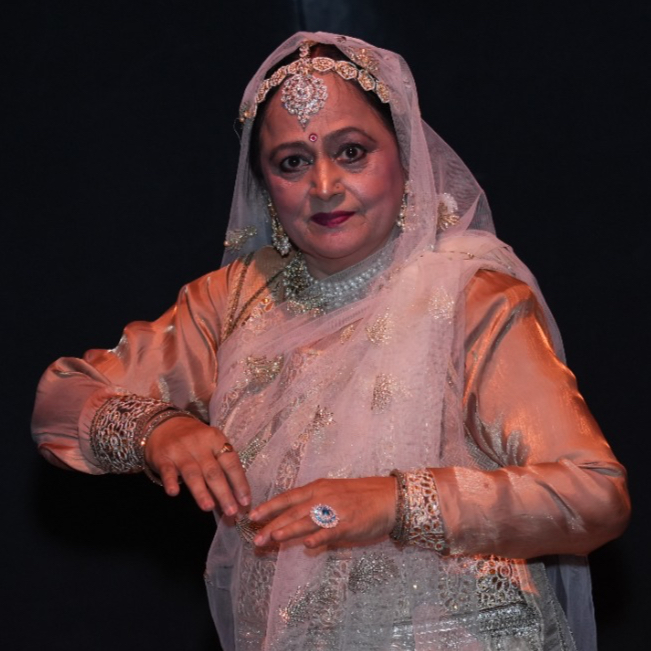
Sitara Devi (1920–2014) was one of India’s greatest Kathak dancers and a pioneering force who brought the classical dance form from traditional courtyards and temples to international stages. Born in Kolkata and raised in Varanasi in a Brahmin family, she faced strong social resistance because, at that time, classical dance, especially Kathak was often looked down upon and associated with courtesans.
Her father, Pandit Sukhdev Maharaj, a renowned Kathak teacher, supported her passion and trained her rigorously from childhood. Despite criticism from society and opposition to girls performing publicly, Sitara Devi continued to practice and perform with determination. Her talent was extraordinary; she gave her first major public performance at the age of 16 and soon gained recognition across India.
Throughout her career, she worked tirelessly to restore dignity and respect to Kathak, performing before thousands in India and abroad. She also acted in several early Hindi films but eventually devoted herself fully to classical dance.
Sitara Devi’s life was a story of courage, discipline, and artistic devotion. Through her struggles, she helped elevate Kathak to a respected classical art form and inspired generations of dancers. Even in her later years, she remained a powerful symbol of resilience and passion for Indian cultural heritage.
SITARA DEVI: THE EMPRESS WHO DANCED BEYOND BOUNDARIES
Born as Dhanlakshmi on 8 November 1920, Sitara Devi rose to become one of India’s most luminous cultural icons, a legendary Kathak dancer, singer, and actress who redefined the presence of Indian classical dance on both national and international stages. Over a career spanning decades, she became synonymous with grace, strength, and artistic fearlessness, earning admiration across continents and carving a legacy that continues to inspire generations.
A CHILDHOOD MARKED BY FIRE AND RESOLVE
Sitara Devi was born into a family deeply rooted in the Kathak tradition. Her father, Acharya Sukhdev Maharaj, of Kabir Chaura Mohalla in Kashi (Varanasi), was a visionary who courageously challenged the rigid social norms of his time. At a time when it was widely believed that girls who pursued dance would lose their respectability and bring dishonor to their families, he chose to teach Kathak to his daughters Taara, Sitara, and Alaknanda Devi.
His progressive stance was met with harsh backlash. In a deeply traumatic episode, he was publicly humiliated, paraded on a donkey, his face blackened, beaten, and disgraced for daring to educate his daughters in classical dance. Sitara was only three and a half years old when she witnessed this cruelty. Though just a child, the pain etched itself into her heart. That moment became the defining turning point of her life.
From that day forward, she embraced Kathak not merely as an art form, but as her life’s mission. In silent determination, she resolved to restore her father’s honor and prove to society that girls were just as capable, powerful, and worthy as boys.
A PRODIGY IN THE MAKING
Her talent revealed itself early. By the age of ten, Sitara Devi was already giving solo performances, sometimes during intermissions at a cinema owned by a friend of her father. Her dedication to dance was so consuming that formal schooling became secondary to her artistic pursuit.
When she was eleven, her family moved to Bombay. Soon after, she performed at Atiya Begum Palace before a distinguished gathering that included Nobel laureate Rabindranath Tagore, Sarojini Naidu, and Sir Cowasji Jehangir. Deeply impressed by her brilliance, Tagore invited her to perform at Tata Palace. After witnessing her extraordinary command over Kathak for nearly three hours, he affectionately bestowed upon her the title Nritya Samragni “Empress of Dance.” She was just sixteen.
Her formal debut at Jehangir Hall, then considered the cultural heart of Bombay, cemented her place as a rising star.
KATHAK MEETS CINEMA
At the age of twelve, Sitara Devi was recruited by filmmaker Niranjan Sharma to perform in Hindi cinema. Moving to Mumbai with her entire family, she began shaping a new idiom of performance, an innovative blend of Kathak with folk and other classical traditions.
Her filmography includes Usha Haran, Roti, Nagina and Anjali, directed by Chetan Anand, brother of Dev Anand. In the epic Mother India, she performed a memorable Holi dance dressed as a boy, showcasing her versatility and theatrical flair.
Through cinema, Sitara Devi brought classical dance closer to mainstream audiences without diluting its depth. She proved that tradition and modernity could coexist beautifully.
A YOUNG GURU AND A PATRIOT
While studying at Kamaksha High School, Sitara Devi began teaching dance to girls older than herself. On one occasion, when Mahatma Gandhi visited, the girls performed choreography she had created. Gandhi ji praised the presentation and asked to meet their guru. When the young Sitara was brought forward, he was astonished that such a remarkable production had been conceptualized by a child.
Beyond the stage and screen, she was deeply connected to India’s freedom movement. She supported freedom fighters in various ways and later organized programs commemorating martyrs, using dance as a medium of patriotic expression and collective remembrance.
CONQUERING THE WORLD STAGE
Sitara Devi’s artistry transcended borders. She performed at some of the world’s most prestigious venues, including the iconic Royal Albert Hall in 1967 and Carnegie Hall in 1976, an extraordinary achievement for an Indian classical dancer of her time.
Her powerful footwork, expressive abhinaya and commanding stage presence earned her the enduring title of the “Kathak Queen.” She carried the tradition from temple courtyards and royal courts to cinema halls and global auditoriums with equal authority.
THE EMOTIONAL POWER OF DANCE
For Sitara Devi, dance was never merely performance, it was resistance, devotion, and identity. In a society that once questioned the dignity of girls who danced, she transformed Kathak into a symbol of empowerment. The stigma that once surrounded female dancers dissolved in the brilliance of her artistry.
Her life was not just a journey of personal triumph but a testament to the transformative power of art. From a little girl shaken by injustice to a global ambassador of Kathak, she embodied dedication, courage, and cultural pride.
Sitara Devi did not simply dance, she declared through every rhythm and whirl that art belongs to all, and that no tradition can truly flourish unless it embraces equality. Her legacy continues to inspire dancers across the world, reminding us that when passion meets purpose, art becomes immortal.


Comments