

India’s Creative Economy Boom Through Rise of Artpreneurs
Updated: Feb 25
India’s economic ascent is no longer driven solely by manufacturing, IT, or infrastructure. A quieter yet powerful transformation is underway—one led by the creative industry, where culture, innovation, and enterprise converge. From traditional crafts and performing arts to digital content, design, and cultural tourism, India’s creative economy is emerging as a dynamic engine of growth.
India’s cultural heritage—its crafts, textiles, music, dance, architecture, and storytelling traditions—has evolved into a source of sustainable livelihood. Handloom clusters, folk-art communities, and indigenous artisans are increasingly connected to global markets through exhibitions, curated platforms, and digital commerce. What was once considered “cultural preservation” is now recognised as economic participation rooted in identity.
A new generation of artpreneurs is redefining the cultural landscape. Artists today are cultural entrepreneurs—running studios, festivals, academies, digital platforms, and creative start-ups. Classical dancers curate international festivals, folk musicians collaborate with global soundscapes, and visual artists build brands that travel across borders. Creativity has become scalable, exportable, and economically viable.
Cultural festivals, heritage walks, craft villages, dance and music festivals, and yoga retreats have strengthened India’s position in the experiential tourism economy. Visitors no longer seek only destinations—they seek stories, traditions, and immersive cultural encounters. This shift has generated employment across hospitality, performance, design, and local communities.
Institutions, academies, and cultural journalism initiatives are formalising creative education—transforming passion into profession. Courses in design, media, heritage management, arts entrepreneurship, and cultural documentation are creating a skilled workforce that feeds directly into the creative economy.
Government initiatives, cultural missions, and global collaborations increasingly recognise the creative sector as a strategic economic and diplomatic asset. India’s music, dance, yoga, cinema, fashion, and crafts function as instruments of soft power, strengthening cultural diplomacy while generating economic value.
India’s creative industry proves that economic growth need not come at the cost of cultural erosion. Instead, it demonstrates a model where tradition fuels innovation, and creativity sustains livelihoods. As India rises on the global economic stage, its creative industry ensures that this growth remains rooted in heritage, diversity, and human expression.
Prof. (Dr.) RAJEEV INDRAMANI JHA | Professor, Bombay Teachers' Training College, Mumbai.

THE QUIET ROOM AND THE LOUD SCREEN
Over the last twenty-five years, the world of Kathak has shifted in ways that once seemed unimaginable. For years, a dancer’s world was contained entirely within the quiet sanctuary of the riyaaz room. It was a place where time seemed to slow down, filled only with the steady rhythm of bare feet hitting the floor and the grounding beat of a teacher’s palm.
This was the heart of the Guru-Shishya tradition—a journey of patience where you did not just learn a movement; you lived with it. A student might spend months perfecting a single gesture until it became as natural as breathing. Back then, the connection between the performer and the audience was built on that same sense of patience. Whether they were gathered in a temple courtyard or a grand theater, people did not just come to see a polished ‘act’. They came to witness the soul of the process, moving together through the shared belief that true beauty cannot be rushed—it has to be allowed to unfold.
However, as we move through the mid-2020s, that quiet room has been opened to a global, digital public. The rise of social media and the ‘creative economy’ has invited the world in, but it has also changed the rules of engagement. Platforms like Instagram, YouTube, and Facebook have done more than just provide a new stage; they have fundamentally altered how classical dance survives as a profession. Visibility, which used to be granted by a handful of institutional patrons or elite festivals, is now often decided by algorithms and ‘digital consistency’.
This transition has forced a new question: How does an art form built on silence and years of discipline survive in a world that demands a new post every twenty-four hours?
THE RISE OF THE ‘ARTPRENEUR’:
This digital shift has given birth to a new kind of practitioner: the Artpreneur. Calling someone an ‘Artpreneur’ is not just about using a catchy new word; it marks a total shift in what it actually means to be a dancer today.
In the past, dancers were largely ‘receivers’ —they took in knowledge from their gurus and relied on the support of the state or wealthy patrons to survive. But those old safety nets have mostly disappeared. With government funding drying up and steady teaching jobs harder to find, dancers have been forced to take their careers into their own hands, acting as their own agents, publicists, and business managers all at once.
Living as an Artpreneur is like living two lives at the same time. In the morning, you are a student of an ancient world, pushing yourself through the same grueling footwork and dizzying turns that dancers have practiced for centuries. But by the afternoon, the bells come off and the laptop opens. Suddenly, you are a digital strategist—editing reels, answering messages from students halfway across the world, and figuring out the logistics of a global collaboration. It is a constant back-and-forth between the discipline of the past and the hustle of the present.
Crucially, this is not about ‘selling out’. For most, it is a form of cultural service. By mastering the tools of the creative economy, these dancers are ensuring that Kathak remains a viable career for the next generation. They are taking the Guru–Shishya ethos and translating it into a modern language that the market can understand. They are no longer waiting for the phone to ring with an invitation; they are building their own stages, one post at a time.
RESEARCHING THE ‘DIGITAL TURN’:
The scholarly world is starting to take notice of this evolution. Recent research, such as Gupta’s (2025) work on social media’s impact, highlights a fascinating tension. On one hand, the digital world has democratized Kathak. A student in a small town in Europe or a rural village in India can now learn from a master in New Delhi via a smartphone. But on the other hand, there is a legitimate worry about ‘depth’. Does the art get thinner when it is spread so wide? If we look back, however, we see that Kathak has always been a survivor. It has moved from the spiritual atmosphere of temple rituals to the opulence of Mughal courts, and later to the formal proscenium stages of the 20th century. Each time the patronage changed, the dance changed too. The ‘digital turn’ is simply the latest chapter in this long story. It is not necessarily a break from tradition; it is a continuation of Kathak’s remarkable ability to adapt.

CORE QUESTIONS FOR A NEW ERA:
As we look at the current landscape, three major questions emerge:
[1] Pedagogy: When the guru and student are separated by thousands of miles and a screen, how does the ‘soul’ of the training get passed across?
[2] Aesthetics: How do the nuances of abhinaya—the delicate storytelling through the eyes and face translate into the small, compressed frame of a mobile phone?
[3] Sustainability: Can a dancer maintain the ‘slow time’ required for artistic mastery while keeping up with the ‘fast time’ required by social media?
RASA IN THE AGE OF REELS:
Perhaps the most debated topic is the survival of rasa. In the ancient Nāṭyaśāstra, rasa is the emotional ‘flavour’ of a performance. It is something that is co-created between the dancer and the audience over time. Traditionally, a performance might last two or three hours, slowly drawing the audience into a specific emotional state. Social media ‘reels’ however, give a dancer sixty to ninety seconds. If you take a closer look at the dancers who are actually succeeding online, you will notice they are not just copying their stage performances—they are making smart, intentional changes. They have learned how to ‘zoom in’ on the feeling.
The camera has become a sort of intimate spectator for them. Instead of the grand, sweeping movements you would need to reach someone sitting in the back row of a balcony, they focus on the small things—a subtle shift in the eyes or a delicate hand gesture that feel incredibly personal when you are watching them on a phone in the palm of your hand. They use captions and voice overs to guide the viewer, playing the role that a live narrator used to fill. They have not abandoned the soul of the dance (rasa); they have just put a new frame around it. They are proving that even in a sixty-second clip, you can still spark a real, human connection.
THE REALITY OF THE ‘HYBRID’ CLASSROOM:
This same flexibility has transformed the ‘hybrid’ classroom. Learning is no longer an all- or-nothing choice between the internet and the studio; the two have started to merge into something new. Most dancers today do not see the internet as a replacement for the guru. Instead, technology has become a partner to tradition. Online classes act as a vital bridge, helping students stay connected to their teachers between those intense, face-to-face workshops. It has opened up a global conversation and an exchange of ideas that simply was not possible a generation ago. Of course, this ‘hybrid’ way of working is not without its hurdles. As Kapoor (2024) notes, digital platforms have become essential classrooms for anyone living far away from big cultural centers. While this makes the art form much more inclusive, it places a huge responsibility on the teacher to make sure the soul and quality of the dance do not get lost in translation. Today’s ‘Artpreneur’ teacher has to be more than just a great performer; they have to be a skilled digital communicator who can translate complex, physical movements through the lens of a webcam.
INCLUSIVE ACCESS AND THE GLOBAL DIASPORA
One of the most powerful things about this digital shift is how it has democratized the art form. For a long time, if you wanted high-level Kathak training, you had to be in cities like Delhi, Lucknow, or Jaipur. If you lived elsewhere, finding a master teacher was almost impossible. But today, the digital stage has leveled the playing field. For the Indian diaspora, these platforms are a cultural lifeline. Now, a second generation Indian living in London or Toronto can plug into their heritage in real-time, learning from the same masters as a student in India.
But even within India, this shift supports Sustainable Development Goal 4 (SDG 4)—inclusive and equitable quality education. Students from smaller towns or marginalized communities can now watch, learn, and even audition through their screens, breaking down barriers that used to be impossible to cross. This does more than just grow the audience; it brings fresh perspectives into the art form, allowing new voices to explore and reinterpret traditional themes in their own way.
BRIDGING THE POLICY GAP: NEP 2020 AND BEYOND
But there is a growing disconnect between what’s happening on the ground and what’s written in official policy. India’s National Education Policy (NEP) 2020 talks beautifully about the value of our ‘Indian Knowledge Systems’ and cultural roots. It dreams of a future where the arts are not just an afterthought but are woven into the fabric of everyday learning—moving away from memorizing facts toward truly experiencing the craft. In many ways, Kathak dancers are already living this vision; they have made traditional knowledge feel accessible, modern, and tech-savvy. The problem is that the institutional support just is not there yet. Most ‘Artpreneurs’ are working as independent artists with no real safety net —no health insurance, no pension plans, and no formal recognition of the sheer amount of work they do online.
On top of that, we are missing a real sense of ‘digital literacy’ in the classical world. In an age where a viral video can easily be mistaken for a lifetime of training, we need a way to help students and the public tell the difference between a clever piece of entertainment and true, deep teaching. The NEP 2020 calls for a ‘holistic’ education, but for that to mean anything in the arts, we need digital certifications that carry the same weight and respect as a traditional degree.
THE ‘MIRROR EFFECT’: DIGITAL PRACTICE AS A TOOL FOR GROWTH
Interestingly, this digital shift has even changed the way dancers practice—creating what you might call a ‘mirror effect’. When a dancer prepares a reel or a virtual lesson, they are forced to become their own first audience. They are not just practicing; they are watching themselves from the outside, often for the first-time with such scrutiny. They record, watch, critique, and re-record. This ‘mirror effect’ of the camera has introduced a new level of self-awareness in riyaaz. Dancers are becoming more precise in their technicality because the camera does not lie—it catches every misplaced finger and every unsteady chakkar. While some fear this leads to a ‘mechanical’ perfection, many find it a useful tool for refining their abhinaya. By watching themselves, they can see exactly how a subtle emotion translates to a viewer, allowing them to bridge the gap between their internal feeling and the external expression more effectively.
MOVING FORWARD: RECOMMENDATIONS FOR A LIVING ART
For Kathak to thrive in the creative economy, we need to take several concrete steps:
Integrate Digital Pedagogy: Dance schools should teach students not just how to dance, but how to navigate the digital world. This includes understanding lighting, sound, camera angles, and digital ethics.
Redefine Patronage: Government and private grants should recognize digital outreach as a valid form of cultural preservation. We should be funding high-quality digital archives and online teaching platforms as much as we fund live festivals.
Quality Assurance Frameworks: We need to develop guidelines that distinguish between ‘performance content’ and ‘educational content’. This will help maintain the rigorous technical standards of Kathak while still allowing for creative digital exploration.
Mental Health and Sustainability: As Artpreneurs, dancers face the ‘burnout’ of the attention economy. We must encourage a practice where digital engagement is a tool, not a master, allowing artists the space for ‘offline riyaaz’ to maintain their creative depth.
CONCLUSION: THE LAYERED STAGE
The engagement between Kathak and the digital world is not a battle between the ‘old’ and the ‘new’. It is a negotiation. We are realizing that reels do not replace riyaaz; they are simply a new layer of the stage. The most successful dancers of our time are those who can stand firmly in both worlds. They are the ones who spend five hours in the studio in silence, and then spend one hour thoughtfully sharing that silence with the world. By recognizing the dancer as an Artpreneur, we are not just looking at someone who is ‘good at social media’. We are looking at a modern custodian of an ancient fire, using every tool at their disposal to make sure it never goes out. To sustain Kathak, we must support the dancer in all their roles—as a student, a performer, and an entrepreneur. Only then can we ensure that the rasa of this beautiful art form continues to be felt, whether it is experienced in a crowded theatre or on a glowing screen in the palm of a hand.
REFERENCES
Gupta, T. (2025). The impact of social media on the practice, perception, and popularity of Kathak dance. International Journal for Multidisciplinary Research, 7(4).
Kapoor, S., et al. (2024). Exploring the impact of social media on the promotion of classical dance forms: A case study of Kathak in the digital era. Frontiers in Health Informatics, 13(3).
Ministry of Education. (2020). National Education Policy 2020. Government of India.
Times of India. (2022, August 27). Social media a vibrant platform for popularizing Kathak, say experts.
UNESCO. (2021). Creative economy and cultural policy.
RAJNI RAO | Ph.D. Scholar & Artiste, Visiting Faculty - Kathak Kendra, New Delhi

Dance as an Avenue to Employment for Students: Opportunities, Challenges and Strategic Pathways
Abstract: Dance — long regarded primarily as a cultural, recreational, or artistic activity - increasingly shows potential as a viable employment and economic opportunity, especially for students who undergo formal dance training. This paper examines the various employment avenues available to student dancers, including the private sector (e.g. dance studios, entertainment, event management), public/institutional sector (e.g. educational institutions, cultural organizations), and freelance/self-employment (e.g. independent teaching, choreography, content creation). Drawing upon recent empirical research and labor data, especially in the Indian context, the study explores both the advantages (skill development, flexibility, entrepreneurship potential) and challenges (economic instability, social stigma, job insecurity, limited institutional support) associated with dance-based employment. The paper argues that with strategic planning, diversified skill sets, and adaptation to evolving industry trends (including digital media), dance can be a legitimate and sustainable career pathway for students.
Keywords: Dance education; student dancers; cultural industries; studio teaching; choreography career; dance entrepreneurship; private sector jobs; public sector arts employment; dance therapy; performing arts employment; cultural employment opportunities; arts economic development; dance jobs India; classical dance training; contemporary dance careers.
Introduction: In many societies — particularly those where traditional academic and technical careers (medicine, engineering, civil services) are prioritized — dance is often relegated to the status of a hobby, extracurricular activity, or cultural pastime. Young people who learn dance frequently do so for enjoyment, cultural connection, or as a creative outlet, rather than with a clear view toward
professional livelihood.
However, the growing recognition of the “creative economy,” increased demand for cultural programming, entertainment, and wellness services, along with the proliferation of digital media platforms, has begun to shift this perception. In this context, dance is emerging as a potential pathway for employment and entrepreneurship. The main focus is on For the students who often balance education with exploration of interests , formal or informal dance training offers a unique combination of creative expression, discipline, and transferable skills. But under what conditions can dance training translate into sustainable employment? What kinds of opportunities exist across sectors? What are the risks, and how can students maximize their potential while mitigating challenges?
This paper seeks to answer these questions by reviewing existing research and labor data, mapping all possible employment routes for student dancers, and offering strategic recommendations. While some data come from global contexts, there is special attention to India’s evolving dance and cultural landscape, given its rich heritage of classical and folk dance as well as contemporary performance traditions.
Dance Education as Economic and Employment Generator
A recent empirical study from Tamil Nadu underscores the potential of structured dance education to contribute to employment and local economic development. In a sample of 150 participants — including dancers, dance teachers, students, and arts administrators — 74% reported direct employment through dance education, while 68% linked dance to stimulation of local economic activity (classes, performances, cultural events (www.ijfmr.com). This underlines the argument by scholars of the “cultural industries” framework: cultural production — including dance, music, theatre — can serve as a significant driver of economic growth, job creation, and community development, beyond mere aesthetic or heritage value. (www.scholar9.com).
Employment Outlook & Labour Statistics for Dancers
Data from more general labor statistics, such as those compiled by the U.S. Bureau of Labor Statistics (BLS), show that dancers and choreographers constitute a recognized occupational category. As of 2024, there were about 12,300 dancer-jobs and 4,600 choreographer-jobs (www.bls.gov). The BLS projects employment in this sector to grow about 5% between 2024 and 2034, slightly faster than the average for all occupations. (bls.gov) Median hourly wages (in the U.S. context) for 2024 were approximately US $23.97 for dancers and US $26.73 for choreographers (www.bls.gov). These data indicate that — at least in some markets — dance is recognized as a profession with measurable demand. Many dancers transition over time from performance to roles such as choreography, teaching, or arts management — acknowledging that physical performance has limited longevity (www.learn.org).
Diversity of Career Paths in Dance — Beyond Performance
Literature on career development in dance underscores that a “portfolio career” approach is commonly adopted: that is, dancers combine multiple roles — teaching, choreography, administration, wellness/fitness, content creation — rather than relying solely on performance contracts (www.prospects.ac.uk). Some dancers move into allied fields like dance therapy or wellness-based dance fitness, another emerging area especially in urban contexts (www.studyinfocentre.com). This diversification reduces dependency on performance opportunities (which may be irregular or age-limited) and offers more stable income sources over time.
Challenges: Social Perception, Job Insecurity, Gender and Longevity Issues despite potential, dance as a profession still faces major hurdles — especially in societies with conventional views on “respectable” careers. In India, for example, many families and communities regard dance as a hobby or entertainment rather than a serious lifelong profession, discouraging students (especially males) from pursuing dance professionally (www.lifeandmore.in). Even where opportunities exist, job security is often limited: many dancers are self-employed or contract-based; income can be irregular; and institutional support (scholarships, pensions, welfare) is often lacking (www.learn.org).

Moreover, long-term sustainability is a concern: dancing is physically demanding, and many dancers face early retirement from active performance. (bls.gov) Research also suggests that many dancers tend to exit the profession over time — especially if they begin at older ages or lack supportive structures. (www.springerLink). Gender and representation can further compound challenges: in some dance traditions and performance contexts, collaboration networks and opportunities may show structural imbalances (www.arxiv.org). In sum, while dance offers potential, the career path is uncertain and often depends on personal resilience, adaptability, and willingness to diversify.
Methodology (Hypothetical / Proposed Approach)
Because this article is primarily conceptual and based on literature review and existing data, the methodology is as follows:
[1] Literature Survey: Collect recent research articles, reports, statistical data, and labor market analyses relating to dance employment globally and in India.
[2] Empirical Example Inclusion: Highlight empirical studies — for instance the Tamil Nadu study showing employment through dance education — to provide evidence for claims (www.scholar9.com).
[3] Sectoral Mapping: Identify and categorize possible employment sectors for dancers: private (studios, entertainment, events), public/institutional (education, cultural bodies), freelance/self- employed (teaching, choreography, wellness, digital content).
[4] Risk and Challenge Analysis: Compile documented challenges including social perceptions, job instability, physical demands, age/gender attrition etc., using both qualitative and quantitative sources.
[5] Recommendation framework: Based on literature and data, propose strategic approaches for student dancers to maximize employability, sustainability, and economic resilience. Because of the limited availability of large-scale longitudinal data on dance careers — especially in India — the paper acknowledges the need for further empirical studies (e.g. longitudinal surveys tracking dance-trained students over time, income stability, career transitions).
DISCUSSION
Mapping Employment Avenues: In this section, we explore in detail the various employment avenues for students trained in dance, along with opportunities, challenges, and strategic considerations.
[1] Private Sector: Studios, Entertainment, Events, Media
The private sector remains one of the most accessible and dynamic employment zones for dancers. Key sub-sectors include:
Dance studios / private academies / community centers: Students and trained dancers can work as instructors or assistant instructors, teaching classical, contemporary, folk, commercial, or fitness-based dance classes. The demand for qualified dance teachers has increased in urban and semi urban areas, especially as dance gains recognition as a form of extracurricular education (www.studyinfocentre.com).
[2] Entertainment industry (films, TV, music videos, commercials, live shows): Many dancers find opportunities as background dancers, performers, choreographers, rehearsal assistants, or part of production teams. The expansion of media, advertising, and entertainment — along with growing consumer appetite for dance in music videos, social media, cultural shows — creates demand (www.studyinfocentre.com).
[3] Events, corporate events, hospitality, social gatherings:
Dancing performances are often required in weddings, corporate functions, cultural events, hospitality sector, and regional festivals. Dancers and choreographers can find gig based work in these settings (www.akadalearn.com).
[4] Ancillary roles ~ choreography, production, management, dance-based fitness/wellness:
Dancers with entrepreneurial drive can take roles beyond performing: choreography for shows and media; managing or producing dance events; launching dance-fitness or wellness classes; combining dance with fitness, therapy, or health promotion. (www.learn.org)
Advantages: The private sector offers flexibility, multiple income streams, creative freedom, and opportunities to build one’s own brand. For students, this flexibility is particularly useful since they may be studying and working simultaneously.
Challenges: Work tends to be irregular and project-based; income may fluctuate. There is high competition, especially in entertainment and event-based roles. The absence of long term contracts and social security (healthcare, pension, job stability) makes it risky as a sole livelihood. Also, success often depends on networks, visibility, and continuous self promotion.
PUBLIC / INSTITUTIONAL SECTOR:
[1] Education, Cultural Bodies, State-Supported Programs: Another employment avenue is through public institutions, educational bodies, and cultural organisations. This includes:
[2] Schools, colleges, universities, community cultural centres: Dance-trained students can take up roles as dance instructors or teachers, teach cultural programmes, run extracurricular dance activities for students, or even contribute to curriculum design if the institution offers dance or performing arts courses. (www.studyinfocentre.com)
[3] Cultural organisations, state-run arts academies, repertory theatres, government- sponsored festivals: In countries with rich dance traditions (like India), there exist state- supported cultural bodies that organize performances, festivals, training programs — offering opportunities for trained dancers to perform, choreograph, or conduct workshops. The professional legitimacy of such institutions can bring more stable income than freelance gigs (www.scholar9.com).
[4] Dance research, documentation, and arts management roles: For those with academic interests, the institutional sector may allow involvement in dance research, archiving/preservation (especially of classical and traditional dance forms), arts administration, or cultural outreach programs (www.ijfmr.com).
[5] Advantages: Institutional roles tend to offer more stability, possibly regular salaries or stipends, social recognition, and long-term career prospects. For many students, such jobs can provide a stable foundation before (or while) pursuing other ventures.
[6] Challenges: Such opportunities may be limited in number, particularly outside major urban or cultural hubs. Recruitment may be infrequent, and competition may be high. Additionally, public funding and support for arts may fluctuate depending on political or economic conditions.
FREELANCE & SELF-EMPLOYMENT / ENTREPRENEURIAL PATHS:
Many dancers — especially students and early career artists — choose freelance or entrepreneurial paths.
These include:
[1] Independent teaching / private classes / small dance studios / workshops: Students can start small — offering classes to children or adults, weekend/evening sessions, or specialized dance style classes. Over time, this may expand into a more formal studio or academy.
[2] Choreography, project-based performance, collaborations: Freelancers can take up choreography assignments for music videos, events, advertisements, social media content; collaborate with other artists (musicians, theatre artists), or participate in interdisciplinary projects.
[3] Digital content creation, online teaching, virtual workshops: With the rise of digital media and remote learning — accelerated by the COVID-19 pandemic — many dancers have shifted to online classes, virtual performances, and content creation (tutorials, dance blogs, social media dance content). Reports suggest many in the dance industry have increased digital skills to adapt to changing demands. Highlight is that 40% of dance professionals have experienced a job change due to reskilling efforts and 65% of dance companies have integrated online re-skilling programs for their staff(www.zipdo.co).
Wellness / fitness / dance therapy / holistic health sectors: Dance can intersect with fitness and wellness — e.g. dance-fitness classes, therapeutic dance, movement therapy, wellness workshops allowing dancers to tap into broader markets beyond performance arts. The journey of dance from ancient rituals to modern performances is a testament to its resilience and adaptability. As dance continues to evolve, so do the opportunities for individuals to forge meaningful and fulfilling careers in this expressive art form(www.studyinfocentre.com).
Advantages: Entrepreneurial and freelance paths offer maximum autonomy, creative control, flexibility, and the possibility of building a personal brand. For students, entrepreneurship allows balancing academic commitments while growing a dance-based venture.
Challenges: Income unpredictability, high initial effort, need for business skills (marketing, management), reliance on self promotion, and often lack of institutional support or social security. Also, freelance dancers may face burnout or have to transition to other roles over time due to physical load or changing interests.
BENEFITS AND CONSTRAINTS OF DANCE-BASED CAREERS FOR STUDENTS
Benefits / Strengths:
[1] Skill development beyond dance: Dance training builds discipline, time-management, teamwork, coordination, body awareness, creativity, confidence, and communication skills. These soft and hard skills are often transferable to other jobs including teaching, fitness, wellness, arts administration.
[2] Flexibility: For students concurrently studying academics, dance-based employment offers scheduling flexibility — part-time classes, evening/weekend sessions, project-based work, or freelance gigs.
[3] Entrepreneurship potential: Starting small (private classes, workshops, community classes) can gradually evolve into a stable business (studio, academy). This empowers students to build their own path, especially in areas underserved by formal dance institutions.
[4] Cultural preservation and social value: For traditional/classical dance forms, engaging in dance helps preserve cultural heritage, fosters community engagement, and enhances social recognition of arts.
[5] Multiple income streams & diversification: By combining roles (teaching + choreography + performance + digital content + wellness), dancers can diversify income sources, reducing dependency on a single type of job.
Constraints / Risks / Challenges:
[1] Economic instability and irregular income — especially for freelancers; performance opportunities may fluctuate; many dancers supplement with other jobs or abandon dance eventually (www.bls.gov)
[2] Social stigma and undervaluation — In many communities, dance is still viewed as a hobby or entertainment, not a serious career; families may discourage students from pursuing dance professionally (www.lifeandmore.in).
[3] Limited institutional support and infrastructure — outside major urban/cultural centers, there may be few formal dance academies, performance platforms, or government-backed cultural institutions.
[4] Physical demands and career longevity — active performance often has a limited time span; many dancers face early exit or switch roles (teaching, choreography, admin) for sustainability (www.bls.gov).
[5] High competition and subjectivity — success in performance-based work often depends on talent, visibility, networking, luck; not purely on formal qualifications or training.
[6] Gender and representation inequities — as shown in research on collaboration networks (e.g. in ballet), structural biases may limit opportunities for certain groups. (www.arxiv.org).

RESULT- STRATEGIC RECOMMENDATIONS FOR STUDENTS
Based on the analysis, here are recommended strategies for students who wish to pursue dance as a profession or at least as a significant part of their livelihood:
Combine dance training with formal education or alternate qualification — Given potential instability, having a formal degree (in any field) or another qualification ensures fallback options. This also adds legitimacy when applying to institutional roles (teaching, arts administration).
Build a diverse portfolio — don’t rely only on performing — Include teaching, choreography, workshops, wellness/fitness classes, digital content creation. Diversification spreads risk and increases adaptability.
Focus on entrepreneurship and self branding — Starting small (private classes, community workshops, online tutorials) can gradually grow into a stable studio or dance-based business. Learning basic business and marketing skills can help in managing and scaling such ventures.
Leverage digital media and remote teaching possibilities — Post-pandemic, many dance studios and companies have adopted online training and virtual performances; some dancers have shifted to digital content creation, remote teaching, or hybrid models. (www.zipdo.co) Use social media, video platforms, streaming to reach wider audiences and diversify income.
Network, collaborate, and seek institutional or community support — Connect with local cultural groups, dance academies, community centers, or arts organisations; apply for grants, scholarships if available; collaborate with musicians, event planners, or wellness practitioners.
Advocate for recognition and support for dance as a legitimate profession — Societal attitudes often shape opportunities. By engaging in community outreach, creating visibility for dance careers, and sharing success stories, students and practitioners can contribute to de- stigmatization and build demand for structured support (funding, institutional jobs, welfare).
Plan for career transitions — Recognize that active performance may not last indefinitely. Consider switching over time to teaching, choreography, arts management, wellness/dance therapy, or other allied careers.
CONCLUSION
This paper argues that dance — when approached with seriousness, training, and strategic planning — can serve as a legitimate and viable avenue for employment and livelihood for students. While there are significant challenges — economic instability, social stigma, limited institutional support, physical demands — the growing recognition of cultural industries, expanding demand for entertainment, wellness, and digital media, and increasing acceptance of creative careers offer opportunities that earlier generations may not have had.
For students interested in dance, combining training with education, building diversified portfolios (teaching, choreography, wellness, content creation), leveraging digital platforms, and adopting entrepreneurial mindset can increase the chances of a sustainable career. At the same time, structural changes, better institutional support, policy-level recognition of performing arts as a viable profession, cultural shifts in perception can make dance based careers more secure and respected. In sum, dance does not have to remain a hobby or side interest with commitment, skill, and strategy, it can be a pathway to livelihood, entrepreneurship, cultural contribution, and personal fulfillment.
REFERENCES:
Sahayaraani, K. Dance Education that Provides Employment and Economic Development: A Perspective. International Journal for Multidisciplinary Research (IJFMR), 2025. (www.ijfmr.com)
U.S. Bureau of Labor Statistics. Dancers and Choreographers: Occupational Outlook Handbook. 2024. (www.bls.gov)
“Career in Dance: How dance has evolved over the years.” Study Info Centre — blog on dance careers. (www.studyinfocentre.com)
Professional Dancer: Career Profile, Occupational Outlook, and Education Prerequisites. Learn.org. (www.learn.org)
“Dance as profession is still frowned upon in India.” LifeAndMore column by Sandip Soparrkar. (www.lifeandmore.in)
“Should I stay or should I go? Early stages in performing artistic careers.” Journal of Cultural Economics, 2025. (SpringerLink)
Prospects UK. “Dancer job profile.” (Prospects)

DHIREN BAROT | National Executive Pr & Marketing, Chanakya Varta Media Pvt. Ltd. (Delhi), Ahmedabad.

India’s creative economy is experiencing a significant boom, driven by a new wave of ‘artpreneurs’ (creative entrepreneurs) who are leveraging technology, cultural heritage, and modern business strategies to create value and jobs. and content creators who blend artistic expression with strategic business acumen. These individuals and small businesses are transforming traditional art forms and new media into commercially viable industries. This sector, valued at approximately $30-35 billion and employing 8% of the workforce, is rapidly becoming a key engine for economic growth and global soft power.
THE RISE OF ARTPRENEURS
The term ‘artpreneur’ describes creative individuals who leverage their artistic skills and entrepreneurial spirit to build sustainable businesses, often utilizing digital platforms to reach global audiences. Their rise is fueled by certain circumstances which may describe as under.
Digital Platforms: The widespread use of social media and over-the-top (OTT) platforms has democratized content creation and distribution, allowing artists, filmmakers, musicians, and designers to bypass traditional gatekeepers and monetize their work directly also more effectively. Connect directly with global audiences. India has over 100 million content creators, with a thriving influencer market.
Authenticity and Niche Expertise: Consumers, especially younger generations, increasingly trust recommendations and content from individual creators over traditional brand advertising. Artpreneurs offer authentic, relatable, and specialized content that caters to specific communities.
Innovation: Artpreneurs are at the forefront of integrating new technologies like AI, AR, VR, and blockchain into their creative processes, creating new forms of expression and business models, such as smart contracts for music rights and AI- assisted design.
Moreover, Creativity is flourishing beyond major metros, with non-metro cities and rural areas becoming new creative epicenters. Grassroots innovations and traditional craft clusters are being recognized and scaled, thanks to the entrepreneurial efforts of local artisans and support networks.
Modernity: Artpreneurs are successfully blending India’s rich, diverse cultural heritage with contemporary designs and Western paradigms, creating unique products (e.g., designer saris, modern Indian art) that appeal to both domestic and international markets. Never the less, India’s creativity spans a rich tradition of arts, crafts, design, film, software, and digital media. The design sector accounts for a major share of exports, while the animation, visual effects, gaming, and comics (AVGC-XR) industry is projected for massive growth.
India is a nation of dreams, where innovation and artpreneurship thrive in every corner. With over 65% of the population under the age of 35, young artpreneurs hold the power to shape the future and strengthen the country’s economy. Their creativity, resilience, and drive are not just inspiring—they are essential for building a stable and prosperous India. Young artpreneurs bring fresh perspectives and bold ideas. They are fearless when it comes to embracing change and solving real-world problems.
The creative workforce in India is notably young, with a large percentage falling between the ages of 15 and 29. This demographic is eager to pursue creative fields as viable and secure career paths, bringing fresh energy and innovation to the sector. India has one of the world’s youngest and largest digital creator communities, influencing over $350 - $400 billion in consumer spending.
Whereas, the government has initiated several programs to nurture the creative ecosystem. National Creators Award, An initiative to acknowledge digital innovators and content creators for their impactful contributions. Indian Institute of Creative Technology (IICT), A planned national center of excellence in Mumbai for AVGC-XR, with partnerships from tech giants like Google, Apple, and Microsoft.
Also, The Indian government is actively supporting the sector through initiatives like Startup India, Atal Innovation Mission (AIM), the National Handicraft Development Programme (NHDP), and the proposed $1 Billion Creative Economy Fund. These programs provide funding, mentorship, and infrastructure to nurture creative talent. Startup India, scheme that provides financial support and incubation to foster entrepreneurship in the creative sectors.
IMPACT OF ARTPRENEURS
The creative economy is currently valued at around $30-36.2 billion with the media and entertainment sector alone estimated at $28 billion.and contributes nearly 8% to India’s total employment, a higher share than many developed nations.Creative occupations pay significantly higher than non-creative ones, with one report noting an 88% difference. Such a way, create diverse job opportunities in sectors such as film, music, design, digital media, and handicrafts, often paying well and driving a decentralized creative revolution. The sector not only generates significant income and job opportunities but also has major spillover effects, boosting tourism, urban revitalization, and education. Creative hubs in cities like Jaipur and Mumbai are revitalizing urban spaces, attracting tourists, and boosting local property values and investment.
By exporting unique cultural goods and services, Creative exports generated over $11 billion in a recent year, with a 20% growth rate. In 2019, total creative exports were around $121 billion, with services accounting for nearly $100 billion. The film industry, including Bollywood, visual effects (VFX), and design services, artpreneurs are strengthening India’s global branding and cultural influence. which is a major contributor to India’s global soft power and enhanced global presence.
The rise of Artpreneurs is a key factor in India’s creative economy boom, transforming cultural capital into significant economic value and positioning India as a potential global creative powerhouse. Despite the boom, challenges exist, including a fragmented market, the digital divide, and issues with intellectual property (IP) protection. However, strategic investments and a focus on human capital development are expected to help India transition from a hub of creative talent to a global leader in creative innovation. With robust growth and a massive talent pool, India’s creative economy is poised to play a crucial role in its ambition to become a $5 trillion economy.
BHASWATI NANDI PURKAYASTHA | Production Editor, Amrapali Magazine

India is witnessing a quiet yet powerful transformation—one where creativity is no longer confined to studios, stages, or galleries but is emerging as a serious economic force.
At the heart of this shift is the rise of the artpreneur: a new-age cultural professional who seamlessly blends artistic vision with entrepreneurial thinking. This movement is reshaping India’s creative economy and redefining how art sustains itself in the 21st century.
Traditionally, Indian art thrived on royal patronage, temple economies, or institutional support. Today, while those roots remain culturally significant, artists are increasingly becoming self-driven economic actors. Designers, musicians, dancers, filmmakers, illustrators, craft revivalists, and cultural curators are building brands, enterprises, and platforms around their creative identities. This transition marks a shift from dependency to creative autonomy, where artists actively participate in market ecosystems rather than remaining on the margins.
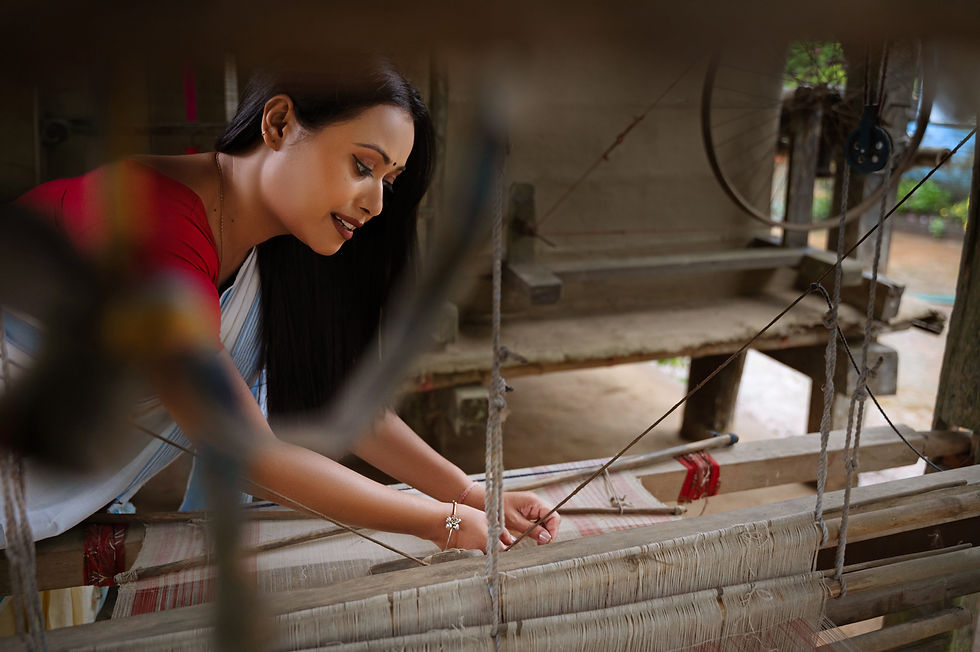
India’s villages are living repositories of artistic knowledge. From handwoven textiles and terracotta to folk paintings, metal crafts, bamboo work, and indigenous performance traditions, rural arts and crafts embody centuries of skill passed down through generations.
In recent years, the development of rural arts and crafts has emerged not only as a cultural necessity but also as a powerful instrument of economic empowerment and sustainable livelihoods.
For millions of artisans across India, craft is not a hobby—it is a means of survival. Strengthening rural arts directly translates into employment generation, especially for women, elderly artisans, and youth who may otherwise migrate to urban centres for work. When artisans receive fair wages, regular orders, and market access, craft-based livelihoods become stable and dignified. Social media, e-commerce platforms, NFTs, OTT services, cultural tourism, and experiential festivals have opened global markets for Indian creativity.
The National Education Policy (NEP) 2020 has further legitimised creative disciplines by integrating arts, design, and skill-based learning into formal education. Digital tools have democratised access. Artists from small towns and rural regions can now reach global audiences without intermediaries. Technology has turned creativity into a borderless economy, where ideas travel faster than infrastructure.
India’s greatest strength lies in its cultural diversity. Artpreneurs are drawing from local traditions, indigenous knowledge, classical forms, and regional narratives, transforming heritage into contemporary relevance. This has created a unique economic model where preservation and innovation coexist. In this process, culture is no longer seen as fragile or ornamental—it becomes productive capital.
One of the biggest challenges faced by rural artisans has been limited access to markets. With the rise of craft fairs, government emporia, e-commerce platforms, GI tagging, and direct-to-consumer models, artisans are now better positioned to receive fair value for their work. Eliminating multiple intermediaries ensures that profits reach the creator, not just the seller.
Developing rural crafts encourages younger generations to learn and continue traditional skills. Training programmes, design interventions, and collaborations with contemporary designers help artisans adapt to changing tastes while preserving core techniques. This ensures that heritage knowledge remains economically relevant and culturally alive.


Comments