

FOOTSTEPS ACROSS OCEANS: My Father, Pratap Pawar and the Spirit of Kathak in the WestIndies
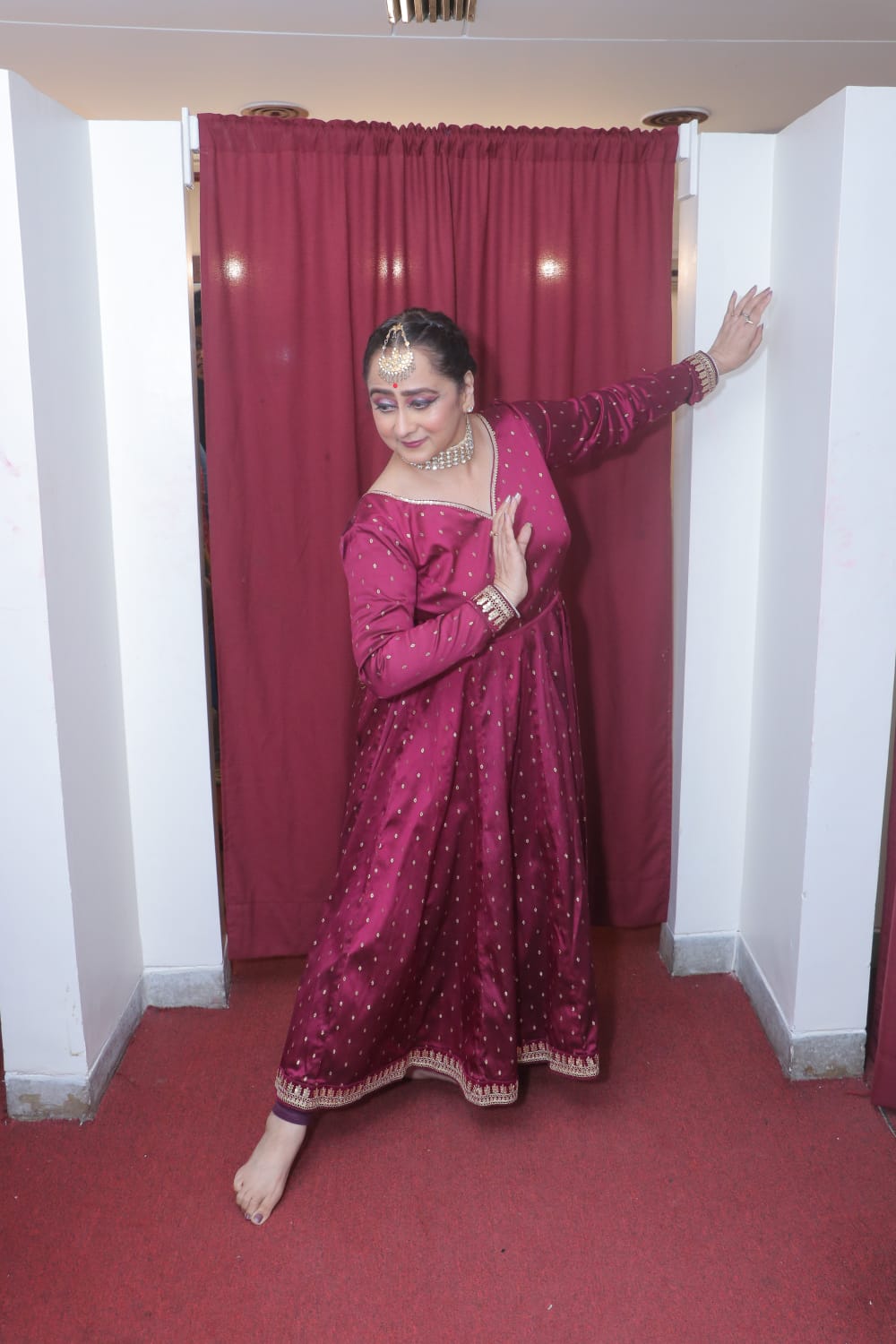
In 1973, my family stepped off a flight into Georgetown, embarking on a cultural adventure that would shape our lives and leave a permanent signature on the history of the Caribbean. Looking back on it now as an artist, I realize how much of my father’s enterprising spirit I absorbed during those foundational years spent traveling between continents. My father, Padmashri Guru Pratap Pawar, is recognized today as a pioneer of classical Kathak dance; but to my younger brother Prashant, and me, he was simply Papa—a tireless creative force who refused to let boundaries dictate his art.
Our journey to South America almost never happened. That year, my younger brother was about to be born, and the Indian Council for Cultural Relations (ICCR) had offered Papa a cultural officer’s posting in Fiji. Hesitant to bring a newborn into an entirely unfamiliar and distant country, Papa turned it down. It was then that the ICCR adjusted the offer for the following year proposing Guyana—or British Guiana, as many still referred to it at the time. Papa was initially skeptical about moving his young family across the Atlantic, but he sought counsel from his spiritual guide, Pandit Birju Maharaj-ji, who encouraged him warmly: “No, you will make good money. It will be good. Take it—you are educated.” Bolstered by the firm support of Mr. Rahman, a key official at the ICCR, Papa took the leap for the sake of Indian culture.

The Rhythm of Georgetown: 54 New Garden Street
We arrived in Guyana as a family of four : Papa, Mum, my little brother, and me. We first settled in Bel Air Park before moving to 54 New Garden Street, an address that became incredibly special to us because it stood just steps away from the Indian Cultural Centre. The Director of the Center at the time was Dr. Joshi, a deeply supportive man who loved my parents and held Papa’s work in the highest regard. The environment he fostered allowed our family to truly integrate into the creative community. Before Papa’s arrival, local perceptions of Indian dance were largely superficial and informed almost entirely by commercial Indian cinema. Many locals associated Indian dance exclusively with the popular cabaret styles seen in films or the routines performed by courtesans. Papa completely flipped this script and transformed this perception. He introduced Guyana to the profound spiritual and historical dimensions of Kathak, demonstrating its complex evolution from its ancient Hindu religious roots to the elegant courtly styles developed under Muslim rulers. Audiences were immediately spellbound by the precision of the footwork, the storytelling, and the sheer elegance of the traditional costumes.
Creating Harmony from Friction
Papa’s true genius, however, lay in his ability to look beyond the conventional boundaries of classical tradition and engage with the unique demographics of Guyana. The country was divided, populated primarily by two distinct groups: Indo-Guyanese citizens whose ancestors had arrived from places like Bihar and South India to work in the sugarcane fields, and Afro- Guyanese communities whose ancestors had been brought as enslaved laborers. Historically, these two groups did not mix easily, and racial tensions frequently simmered beneath the surface.
Papa chose to bridge this historical divide through rhythm. He began designing daring experimental fusions that married classical and folk Indian structures with traditional African styles. He discovered a universal pulse that allowed the classical Indian tabla and local tassa drums to communicate seamlessly with traditional African percussion and the steel pan.
This collaborative spirit brought extraordinary global artists into our orbit. The legendary Haitian ballerina Lavinia Williams began working closely with Papa. While she learned the foundational elements of classical Indian dance from him, she shared her knowledge of Western ballet and African dance forms with local students. In fact, Dr. Joshi’s daughter and I were both fortunate enough to receive scholarships to study ballet and African dance directly under Lavinia Auntie’s expert guidance.

Persistence in the Face of Danger
Being a cultural diplomat under these conditions required immense bravery. Because Papa was actively combining Indian and African art forms on stage, his work was viewed as highly provocative by political extremists who favored absolute segregation. There were even terrifying moments when attempts were made on his life. Furthermore, the domestic political landscape within our own diplomatic circle presented its own trials. The Indian High Commissioner to Guyana at the time, Dr. Gopal Singh, grew fiercely envious of the immense popularity and admiration Papa was receiving from the Guyanese public. But later as a governor of Goa( India) , he welcomed and honoured us immensely.
Despite these bureaucratic hurdles and safety threats, Papa never stopped working. He spent his days and nights choreographing and producing art. Because purpose-built theatres were rare, he adapted local cinema halls for live performances. He would personally ensure that the areas in front of the movie screens were fully decorated and transformed into functional stages for our live shows. Throughout all of this, my mother worked tirelessly by his side. Recognizing her invaluable artistic contributions, the ICCR eventually appointed Mum as an official cultural officer in her own right.
The Diaspora and Beyond
Our four years in Guyana flew by, leaving behind a new generation of dancers who would go on to carry the flame of Kathak across the diaspora—talented students like Shri Mumtaz Ali and Philip McLintock, who has sadly passed away.

Papa’s work also crossed onto the screen; he choreographed the dance sequences for Anmol Bandhan, one of the earliest major films produced in the region, and later returned from Trinidad and Tobago to Guyana to work on the feature film The Sound of Sugarcane. Due to the immense success of the Guyanese mission, the ICCR extended my parents’ contract for an unprecedented additional four years in Trinidad and Tobago, resulting in eight straight years of continuous service in the West Indies. In Trinidad, our artistic = family expanded further. We were supported by wonderful friends like Gaj Singh Jodhpur-ji the then High commissioner who masterfully managed the elaborate theatrical lighting for Papa’s grand dance productions. Every year or two, our family was granted leave by the ICCR to journey back home to India to reconnect with our roots before returning to our work in the Caribbean.
Eventually, Trinidad offered Papa a prestigious ministerial-level contract to remain permanently, but destiny took us in a different direction. While on a family holiday in England, Papa conducted a short dance workshop at the Bharatiya Vidya Bhavan in London. The institution was so impressed that they offered him a teaching position. Valuing his independence above all else, Papa negotiated a contract that required him to teach only three days a week, leaving the remainder of his time entirely free to create, choreograph, and perform. With that decision, he became the undisputed pioneer of Kathak dance in the United Kingdom.
Carrying the Flame Forward
Today, my own career as a dancer reflects this global education. Having been raised across India, Guyana, Trinidad, and England—and later spending time in Kolkata and Delhi—I have learned to dance to any rhythm and create within any cultural language. I owe that fluid artistic identity entirely to the rich exposure my parents gave me. Decades later, Pratap and Priya Pawar still occupy a legendary place in the cultural histories of Guyana and Trinidad.
For me, my father’s legacy is summed up by a simple yet powerful philosophy: never say die, keep creating, and never be afraid to dance beyond boundaries. My dream now is to return to Guyana and Trinidad with my own dance company. I want to walkthose familiar streets, reconnect with old family friends like Chand Uncle and Anita Auntie, and many others to perform my father’s brilliant, historic cross cultural compositions on the very stages where they were born.


Comments