

ENDANGERED TRADITIONS: Are We Losing India’s Dance Heritage?
India’s dance traditions are not merely art forms—they are living embodiments of history, devotion, storytelling, and identity. From the intricate footwork of Kathak to the sculptural grace of Bharatanatyam, from the spiritual lyricism of Odissi to the vibrant storytelling of Kathakali, each tradition carries within it centuries of wisdom passed down through generations. These dances are not static relics of the past—they breathe through the bodies of practitioners, guided by the sacred guru–shishya parampara, rooted in texts like the Natya Shastra, and shaped by the cultural landscapes they emerge from.
Yet, in an age of rapid globalization, shifting cultural priorities, and the dominance of digital consumption, a pressing question arises: are we slowly losing these invaluable traditions? As attention spans shrink and contemporary trends take center stage, many classical and folk dance forms struggle for relevance, resources, and recognition. The rigorous discipline they demand often stands in stark contrast to a world seeking instant gratification, leaving fewer young practitioners willing to commit to a lifelong journey of mastery. At the same time, the spaces that once nurtured these traditions—intimate baithaks, temple courtyards, and royal patronage—have transformed or disappeared. While institutions and festivals strive to keep the legacy alive, the essence of transmission risks dilution when tradition meets commercialization. The challenge is no longer just preservation, but meaningful continuation—ensuring that these art forms evolve without losing their soul.
Beneath the polished stage lights and curated performances lies a quieter, more complex reality—one where many traditions stand at a fragile crossroads. Beyond the well-recognized classical forms like Kathak and Bharatanatyam, a vast landscape of regional and folk practices—Sattriya, Chhau, Yakshagana, and countless others—struggle quietly on the margins. Many of these forms, once integral to community rituals and seasonal cycles, now face dwindling practitioners and fading relevance in the everyday lives of people. The question of “endangerment” is not always visible. It is not only about forms disappearing entirely, but also about the subtle erosion of depth—when movements are performed without context, when abhinaya is reduced to mere expression without emotional or philosophical grounding, and when the spiritual and cultural essence becomes secondary to presentation. As the foundational principles outlined in texts like the Natya Shastra become less studied in depth, the risk is not just of losing dance, but of losing the knowledge systems embedded within it.
Economic realities further complicate the narrative. For many dancers and gurus, sustaining a livelihood through traditional arts alone is increasingly challenging. The absence of consistent patronage, limited institutional support, and the undervaluing of artistic labour often force practitioners to either adapt their art for commercial viability or abandon it altogether. In this shift, authenticity sometimes becomes negotiable, raising important questions about what we choose to preserve—and at what cost.
And yet, there is hope—quiet, resilient, and determined. Across the country, a new generation of artists is reimagining tradition with sensitivity and awareness. Digital platforms, while often blamed for cultural dilution, are also becoming powerful tools of documentation, dissemination, and revival. Young practitioners are returning to their roots, seeking deeper training, questioning superficiality, and finding innovative ways to make tradition accessible without compromising its integrity.
Perhaps the most urgent truth is that heritage does not disappear suddenly, it fades when it is no longer valued deeply. When convenience replaces commitment, and spectacle takes precedence over substance, the essence begins to dilute. The legacy of forms like Odissi or Kathakali survives not just through performance, but through understanding and respect. The real question, then, is not only whether these traditions are endangered, but whether our sensitivity towards them is diminishing—because their future depends as much on society as it does on the artist.
This cover story does not seek to romanticize the past or resist change. Instead, it opens a dialogue—between continuity and evolution, preservation and reinvention. It asks whether we, as a society, are willing to invest not just in the spectacle of dance, but in its substance. For in the delicate balance between memory and modernity lies the future of India’s dance heritage—a future that depends not only on those who perform, but equally on those who watch, support, and believe.
“Endangered Traditions: Are We Losing India’s Dance Heritage?” is not merely a question, but a call to introspection. It invites us to reflect on our role as audiences, patrons, and cultural custodians. Are we witnessing a quiet fading, or a transformation waiting to be understood? And more importantly, what must be done today to ensure that the rhythms of our past continue to echo powerfully into the future?

RASHMI KHANNA
Bharatnatyam Dancer & Special Educator, New Delhi.
Research Scholar, World University of Design, Sonipat.

Traditional Indian classical arts, especially dance and music, have been integral to the Indian legacy. They have been structured forms of education, not only in theory but also in practical demonstration. They allow practitioners to go deeper into themselves and walk the path of self-realisation, which many might equate with achieving God or uniting with the paramaatma. These arts ground us, discipline us, humble us, and practice fortifies ethical and moral values, ultimately making us better human beings. After all, isn’t that the reason why the Natya Shastra itself was created? These arts impact both performers and audiences, elevating their emotional and spiritual states as they seek to understand the Ultimate truth or reality. The sonic vibrations and physical demonstration together elevate consciousness to higher levels of detachment, understanding, and in some cases, moksha.
The essence of Performing Arts does not lie in a single stage performance, but in the years of rigorous training, consistent effort, and surrender to the divine that make this journey arduous and meaningful. It is this unseen labour, this quiet and consistent Sadhana, that builds not just an artiste, but also shapes the inner being of an individual.
However, the past few years, especially with the rise of social media, have witnessed a noticeable decline in the quality of the arts. The depth and duration of traditional performances are being replaced by shorter, fast-paced formats. Speed has replaced form, excessive technique has replaced the joyous abandonment with which dancers once performed, and the steady journey of arts education is gradually diminishing. Workshops labelled as ‘classical’ and ‘semi-classical’ increasingly cater to a wide audience through short-format choreography suited to digital platforms, often reduced to sixty-second performances. The choreographer dances behind each student, posting reels on Instagram, while waiting for likes and shares. The idea of “have feet, can dance” has diluted the seriousness and sanctity of classical arts.
Many people begin learning dance for professional, passionate, therapeutic, emotional, or physical reasons. However, these motivations often fade when students seek quick progress and stage performances within months of training. It is concerning when students prioritise other commitments over practice yet invest significant time creating social media content. This shift in priorities has affected consistency, ultimately impacting the quality of learning outcomes. Parents often act as facilitators, enrolling children in multiple classes to keep them engaged. But knowledge cannot be forced - it must be sought. The inner fire to learn must come from within; only then can one move towards perfection in the art.
Respect for the Guru is also diminishing. Gurus are often treated as salaried instructors expected to produce performers within months. If teachers do not allow students to perform, it is perceived as bias, leading to frequent ‘switching’ of teachers. Aspirations for fame without adequate riyaaz reflect a troubling mindset that prioritizes visibility over depth.
These challenges extend to teaching practices as well. While digital platforms have expanded access to learning, they have also raised concerns about depth and rigour. In some cases, individuals with minimal training assume teaching roles, often learning and teaching through online tutorials. This raises serious questions about standards and pedagogy. While accessibility has increased, it has also enabled shallow learning, which risks endangering the integrity of classical traditions and lowering standards within the dance community. Such dilution does not merely affect individual learners but gradually reshapes the larger ecosystem of the arts in concerning ways.
Another concern is the presentation of emotive sequences, where each emotion is explicitly explained in videos. This approach limits the audience’s ability to interpret and engage independently. Classical arts were intended for an informed and sensitive audience (sahardya), who were well-versed in dramaturgical texts and capable of critical evaluation. Today, audiences often seek speed, fusion, and instant gratification, sometimes appreciating performances without deeper engagement, influenced by social media validation and status. This reflects a lack of exposure to serious art and a reduced willingness to engage deeply with the form, ultimately weakening the aesthetic experience itself.
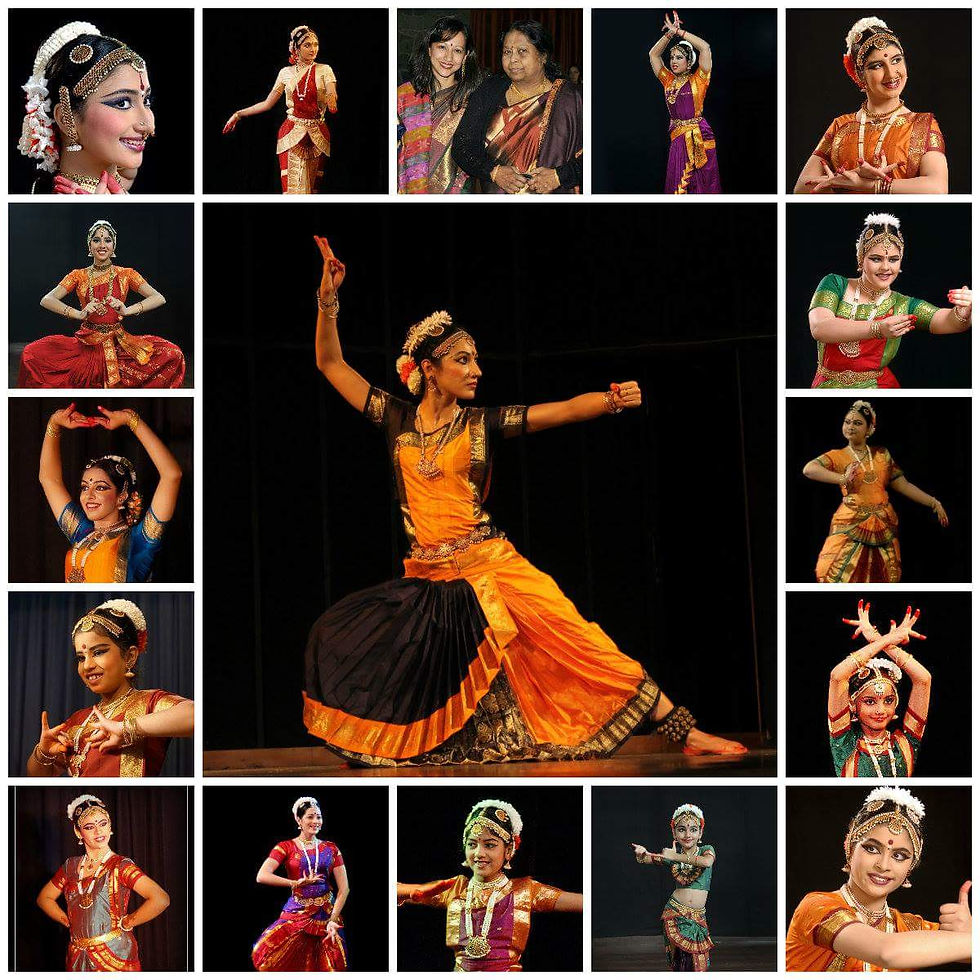
While the traditional Guru-Shishya Parampara had its rigidities, it also emphasized discipline, commitment, and rigorous training. True mastery demands effort, struggle, and dedication over a sustained period of time. This explains why only a few artistes like Balasaraswati, Padma Subramaniam, the Dhananjayans, or C. V. Chandrashekar reached exceptional heights. They lived and breathed their art, understanding it not only physically but also philosophically and spiritually.
Their knowledge extended beyond dance to history, mythology, shastras, music, rhythm, and several interconnected disciplines. This holistic understanding made them visionaries who influenced both the arts and society, bringing about meaningful and lasting transformations.
Today, it is imperative to pause and realign our approach towards the arts. What we are witnessing is not merely a decline but a significant shift - from depth to speed, from sadhana to quick performance, from immersion to instant visibility.
When depth is replaced by convenience, something essential is inevitably lost. The future lies in balance - preserving discipline, sincerity, and deeper engagement while adapting thoughtfully to contemporary contexts without compromising the essence of the art form.
If these traditions are at risk, their preservation becomes a shared responsibility. In safeguarding them, we are not just protecting an art form, but also preserving a profound way of understanding ourselves, our culture, and our inner worlds. If we lose them, we lose a part of who we really are. It is important to pass them on with the same sincerity and depth with which they were given to us. Only then can these traditions continue to live and inspire future generations.
ALAKA BHAGAWATI
School Teacher [Retd.]
Senior Editor, Amrapali Magazine
Performing arts, especially traditional art forms like classical/folk dance, music, instrumental, etc. has a crucial part to play in a school student’s life. The individual being engulfed with imaginations, dreams, determination to prove its artistic dexterity is often witnessed by his school’s teachers and friends alike.

As a school teacher, one stands at a unique and powerful intersection where young minds are shaped, values are instilled, and identities begin to take form. In today’s rapidly evolving world, where technology and modern aspirations dominate the educational landscape, the role of traditional art forms—especially Indian dance, often risks being underestimated. Yet, it is precisely within the school environment that the foundation for preserving and nurturing these endangered traditions can be most effectively laid.
India’s classical and folk dances are not merely extracurricular activities; they are repositories of history, philosophy, discipline, and cultural consciousness. When a child begins to learn a traditional dance form, they are not just memorizing steps they are engaging with stories, emotions, mythology, rhythm, and a deep sense of cultural rootedness. This engagement fosters a holistic development that goes far beyond physical movement. It enhances concentration, builds emotional intelligence, nurtures creativity, and instills a sense of respect for heritage.
For school students, especially in their formative years, exposure to such art forms creates a balance between academic rigor and creative expression. In an education system often driven by marks and measurable outcomes, dance offers a space where individuality is celebrated, patience is cultivated, and learning becomes experiential. It teaches students the value of perseverance, understanding that mastery is not immediate but achieved through consistent effort and dedication.
However, the impact of introducing dance education in schools depends significantly on the quality of guidance provided. The presence of adequately trained and knowledgeable artistes as teachers is not just beneficial, it is essential. A well-trained artiste brings authenticity, depth, and a correct understanding of technique and theory. Without this, there is a risk of students learning superficial or incorrect forms, which can lead not only to physical strain but also to a dilution of the art itself.
An experienced dance educator understands the importance of foundational training posture, alignment, rhythm, expression and can communicate the cultural and philosophical context behind each movement. They serve not only as instructors but as custodians of tradition, ensuring that what is passed on to the next generation retains its integrity. At the school level, this becomes even more crucial, as students often encounter these art forms for the first time here.
Equally important is the institutional attitude towards art education. Art Education and Work Experience periods in schools are often treated as secondary spaces where academic pressure momentarily relaxes, but not necessarily where meaningful learning is expected. This perception needs urgent transformation. These periods should be recognized as integral to a child’s education, not as optional or expendable segments of the timetable.
When students sense that these classes are undervalued, they naturally begin to disengage. Conversely, when the school ecosystem, teachers of all subjects, administrative staff, and most importantly, the Principal places genuine importance on these disciplines, students respond with interest and respect. The Principal, as the leader of the institution, plays a pivotal role in shaping this culture. Their support can ensure proper allocation of time, resources, and qualified faculty, as well as create opportunities for students to perform, learn, and grow.
Subject teachers, too, have a responsibility in this regard. When they acknowledge and encourage students’ artistic pursuits, rather than viewing them as distractions from academics, they contribute to a more balanced and inclusive learning environment. Interdisciplinary connections can further enhance this approach—linking dance with history, literature, or even science, thereby reinforcing its relevance within the broader curriculum.
Moreover, participation in traditional arts fosters a sense of pride and identity among students. In a globalized world, where cultural homogenization is increasingly common, it becomes vital for young individuals to remain connected to their roots. Dance, as a visual and performative art, allows them to embody their culture, not just learn about it theoretically. This embodied knowledge stays with them, shaping their worldview and deepening their appreciation for diversity.
There is also a social dimension to consider. Schools that actively promote traditional arts contribute to the larger ecosystem of cultural preservation. They create future audiences, practitioners, and patrons, individuals who will value and support these art forms in society. In this way, the responsibility of safeguarding heritage is not left solely to professional artistes, but is shared collectively.
At a time when many traditional practices are at risk of fading, the role of schools becomes even more significant. They are not just centers of academic instruction, but potential guardians of cultural continuity. By integrating traditional dance into mainstream education with seriousness and sincerity, schools can ensure that these art forms do not remain confined to a few dedicated circles, but continue to thrive in the lives of ordinary people.
In conclusion, the question of whether India’s dance heritage is endangered finds part of its answer within the walls of our schools. If we, as educators and administrators, recognize the true value of these traditions and commit to nurturing them with the same seriousness as academic subjects, we can inspire a generation that not only excels intellectually but remains deeply rooted culturally. The preservation of our dance heritage, therefore, begins not on grand stages, but in school classrooms, where every step learned today becomes a bridge to the past and a promise for the future.
KRISHNAKSHI GOSWAMI
Area Academic Manager
Managing Editor, Amrapali Magazine
From the vantage point of being a Regional Head of a play school to an Area Academic Manager of educational schools, one gains a rare and insightful perspective into the earliest stages of a child’s educational journey. These formative years often between the ages of two and six are not merely about introducing alphabets and numbers, but about shaping personality, confidence, coordination, and emotional expression. It is here, in these tender beginnings, that the seeds of cultural awareness and artistic inclination can be most naturally and effectively sown.

In my experience of overseeing curriculum design and school activities across multiple centers, one of the most heartening observations has been the enthusiastic involvement of both children and parents in cultural programs, especially those involving dance and music. Whether it is a small annual day celebration, a festival-based performance, or a thematic showcase, the excitement is palpable. Children, even at such a young age, display a natural affinity for rhythm and movement. They respond instinctively to music, express joy through motion, and find a unique sense of identity on stage.
This early engagement with performance plays a crucial role in developing what we often refer to as “body smartness” a child’s awareness and control over their physical movements. Dance helps refine motor skills, balance, coordination, and posture, all while allowing children to explore space and rhythm in an enjoyable and non-restrictive manner. Unlike structured academic tasks, dance offers freedom within form, encouraging children to move confidently and express themselves without fear of judgment.
Equally significant is the transformation seen in a child’s personality. Many children who begin as shy or hesitant gradually become more open, expressive, and extroverted through participation in group performances. The stage, in this sense, becomes a powerful classroom-teaching confidence, teamwork, discipline, and the ability to communicate without words. These are life skills that extend far beyond the boundaries of school and academics.
An important aspect of this journey is the active role played by parents. In the early years, parents are deeply involved in their child’s school life, attending rehearsals, helping with costumes, encouraging practice at home, and celebrating every small achievement. This shared experience strengthens the parent-child bond and reinforces the value of artistic expression within the family. When parents witness their children perform, often for the very first time, there is a sense of pride and realization that learning is not limited to books, but is also reflected in confidence, creativity, and presence.
However, while this enthusiasm is encouraging, it also brings with it a responsibility. As educators and curriculum planners, we must ensure that this early exposure to dance is meaningful and rooted, rather than purely performative. Even at the play school level, it is possible to introduce elements of India’s rich dance heritage in simple, age-appropriate ways. Basic gestures, storytelling through movement, and culturally relevant music can gently familiarize children with traditional art forms, laying a foundation for deeper engagement in later years.
This is particularly important in the context of preserving our endangered traditions. If children are introduced to these art forms early, they grow up with a sense of familiarity and respect for them. The goal is not to train professional dancers at this stage, but to create awareness, appreciation, and comfort with cultural expression. When a child learns to associate joy and celebration with traditional music and movement, it becomes a part of their identity rather than something distant or unfamiliar.
The role of trained instructors, even at this foundational level, cannot be overlooked. While the complexity of classical dance training may not be suitable for very young children, educators with a basic understanding of rhythm, movement, and cultural context can make a significant difference. They ensure that what is taught is graceful, appropriate, and aligned with the child’s developmental stage. More importantly, they bring sensitivity and intention into the process, preventing it from becoming a mere routine for stage display.
As academic leaders, it is also essential to design a curriculum where art and movement are not treated as occasional activities, but as integral components of daily learning. Structured movement sessions, music and rhythm activities, and regular opportunities for performance should be embedded within the timetable. These experiences should be given equal importance as cognitive learning, reinforcing the idea that education is holistic.
School leadership plays a decisive role in this regard. When Principals and management teams prioritize cultural activities, allocate resources, and encourage teacher training in arts education, the impact is visible across the institution. A school that values artistic expression creates an environment where children feel free to explore, teachers feel empowered to innovate, and parents feel reassured about the overall development of their child.
Furthermore, the early years offer a unique advantage—children at this stage are uninhibited. They are not burdened by self-consciousness or fear of failure. This openness allows them to absorb and enjoy traditional art forms in their purest sense. If nurtured correctly, this early exposure can evolve into sustained interest, leading some children to pursue these traditions more seriously in later stages of education.
In conclusion, the question of preserving India’s dance heritage must begin not at advanced levels of training, but at the very roots of education - our play schools. As educators and administrators, we have the opportunity and responsibility to introduce children to the joy of movement, the richness of culture, and the confidence of expression from the very beginning. The enthusiasm we witness today in school functions and performances is not just a moment of celebration; it is a glimpse into the future. If guided thoughtfully, these small steps taken by tiny feet can grow into a lifelong appreciation for tradition, ensuring that our cultural heritage continues to live, breathe, and evolve through the generations to come.
TIKENDRAJIT SARMA
Retd. Professor, Dept. of Anthropology, North Guwahati College
Consulting Editor, Amrapali Magazine

Having spent a lifetime teaching anthropology at the North Guwahati College in North Guwahati, I have come to understand culture not as an abstract concept, but as a lived reality, something that breathes through people, communities, rituals, and everyday practices. Among the many expressions of culture I have observed, few are as profound and layered as India’s traditional dance forms. These are not merely artistic performances; they are social texts, repositories of memory, and embodiments of collective identity. Today, however, one cannot help but reflect with a sense of concern: are these traditions slowly slipping into obscurity?
In the northeastern region of India, where I spent most of my academic life, dance has always been inseparable from community life. The grace of Sattriya, deeply rooted in the Vaishnavite traditions of Assam, is not just a classical form but a spiritual practice once nurtured within monasteries. Similarly, the vibrant movements seen during festivals like Bihu are not choreographed spectacles in their original context, but organic expressions of seasonal rhythms, agricultural cycles, and communal joy. These forms evolved not in isolation, but as part of a living ecosystem where art, religion, and daily life were intricately intertwined.
It is here that the lens of Cultural Anthropology becomes particularly significant. Cultural Anthropology does not merely document traditions; it seeks to understand how and why they exist, how they are sustained, and what meanings they hold for the people who practice them. Through this discipline, one begins to see dance not simply as performance, but as a symbolic language, one that communicates beliefs, social structures, cosmologies, and shared histories. It allows us to ask deeper questions: What does a movement signify? Why is a particular gesture sacred? How does a community define itself through its artistic expressions?
From this perspective, the endangerment of traditional dance forms signals more than cultural loss it reflects a gradual weakening of the systems that give meaning to human existence. Traditions, as understood in anthropology, are not rigid relics of the past; they are dynamic processes that connect generations. They provide continuity, offering individuals a sense of belonging and identity within a larger social fabric. When such traditions begin to fade, individuals risk becoming disconnected from these deeper cultural anchors.
One of the key factors contributing to this decline is the transformation of social structures. The shift from community-based living to more individualistic, urban lifestyles has altered the contexts in which these dances once thrived. Spaces such as village courtyards, temple grounds, and community gatherings once the natural settings for performance are gradually disappearing or losing their significance. In their place, we find staged performances, often removed from their original context, designed for audiences that may not fully grasp their cultural depth.
There is also the question of transmission. Traditionally, knowledge of dance was passed down through generations within communities or through close-knit systems of mentorship. This process was immersive, requiring time, patience, and a deep sense of commitment. Today, however, this continuity is increasingly fragile. Younger generations, drawn towards modern careers and lifestyles, often find it difficult to dedicate themselves to such demanding practices. As a result, the chain of transmission weakens, and with it, the authenticity of the tradition.
Another dimension that deserves attention is the impact of institutionalization. While the inclusion of dance in academic curricula and cultural programs has undoubtedly contributed to its visibility, it has also led to certain standardizations. In some cases, the diversity and fluidity of regional practices are reduced to fixed formats suitable for examination or stage presentation. From an anthropological standpoint, this raises important questions about what is being preserved, the form, or the essence?
At the same time, one must acknowledge that culture is not static. Change is inevitable, and traditions have always evolved in response to shifting social realities. The challenge, therefore, is not to resist change, but to ensure that it does not lead to erasure. There is a delicate balance between adaptation and preservation between allowing traditions to remain relevant and ensuring that their core meanings are not lost.
In recent years, I have observed both concern and hope. On one hand, there is a visible decline in the everyday practice of many traditional dances. On the other, there is a growing awareness among scholars, artistes, and even young practitioners about the need to reconnect with cultural roots. Efforts are being made to document, revive, and reinterpret these forms, sometimes using modern platforms to reach wider audiences. While such initiatives are encouraging, they must be approached with sensitivity and respect for the communities from which these traditions originate.
As someone who has spent decades studying human societies, I believe that the preservation of dance heritage cannot be the responsibility of artistes alone. It requires a collective effort—one that involves educators, institutions, policymakers, and communities. Schools and colleges, in particular, have a crucial role to play in introducing students to the cultural significance of these art forms, not just as performances, but as integral aspects of social life.
Moreover, the study of Cultural Anthropology also reveals that traditions survive only when they are meaningfully integrated into everyday life. When dance is practiced merely as a staged performance, detached from its ritualistic, social, or spiritual contexts, it risks becoming ornamental rather than essential. Anthropology teaches us to observe how traditions function within a community—how they mark life cycles, celebrate seasons, and reinforce collective values. In this sense, reviving dance heritage is not only about teaching technique, but about restoring its place within the rhythms of lived experience, where it once naturally belonged.
Equally important is the realization that understanding culture through an anthropological lens fosters respect, not just preservation. When individuals begin to see traditions as expressions of human experience rather than outdated customs, their engagement becomes more conscious and empathetic. For younger generations, this perspective can be transformative, it encourages them to question, explore, and eventually embrace their heritage with informed pride. Thus, the role of anthropology extends beyond academic inquiry; it becomes a bridge between the past and the present, helping society recognize that the existence of tradition is deeply tied to our own understanding of identity, continuity, and what it truly means to belong.
Ultimately, the question of whether India’s dance heritage is endangered is not one that can be answered in simple terms. What is clear, however, is that these traditions are undergoing profound transformations. Whether they will continue to thrive or gradually fade depends on the choices we make today—what we value, what we support, and what we choose to pass on.
In the quiet reflections of retirement, I often think of the many performances I have witnessed not on grand stages, but in humble community spaces, where dance was not an event, but a way of life. It is in these memories that one truly understands what is at stake. For when a dance form disappears, it is not just an art that is lost, but a way of seeing, feeling, and being in the world.


Comments