

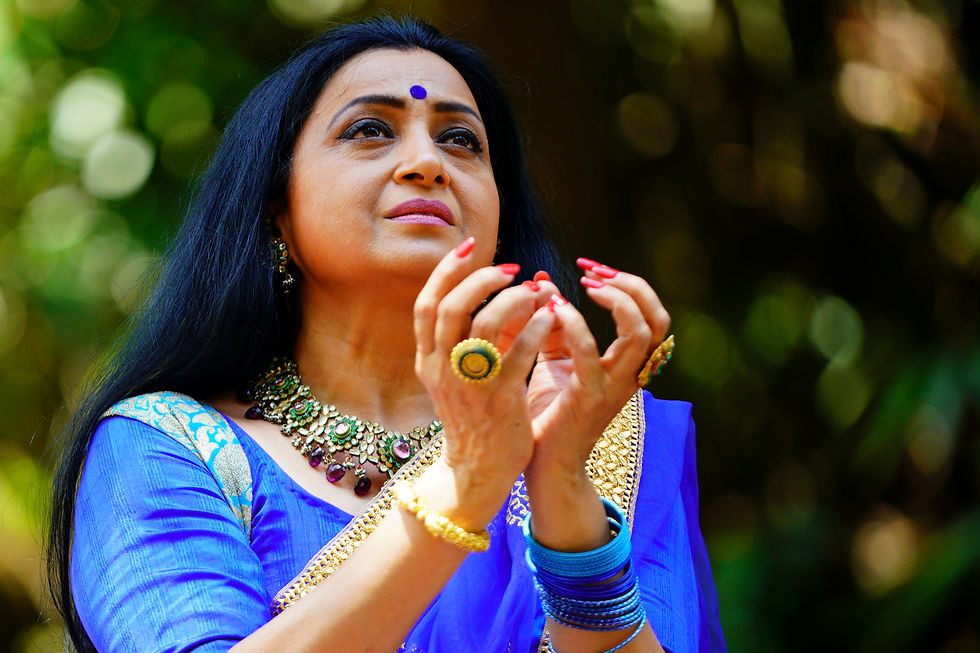
Dr. Pali Chandra

An educationist par excellence, Dr. Pali Chandra has pioneered one of the largest online initiatives in Kathak training. Through her online platforms, offered in both English and Hindi, she has reached over 500,000 subscribers worldwide. This visionary effort has established her as a household name in Kathak, with a mission to connect and inspire millions of dance enthusiasts across the globe. She has been recognised as the ‘Kathak Ambassador' at the House of Lords, London Parliament in 2018, for her contribution to the propagation of classical Indian dance forms, beyond Indian borders. She was honoured as the Cultural Ambassador to the Middle East at the Consulate General of India in 2016. A National Scholarship holder, she has been honoured with the prestigious Lachhu Maharaj Award for abhinaya (the art of expression) and is a Gold Medalist from Prayag Sangeet Samiti (1990). She holds a Doctorate in Dance Education from École Supérieure Robert de Sorbon and has also been conferred an Honorary Industrial Doctorate by AIMRI for her extensive research and contributions to the performing arts. Dr. Chandra is widely recognised for her contributions to society and the environment, leading numerous charitable initiatives since 1995. Her work spans from awareness programmes for individuals with special needs to supporting the homeless in Harrow, UK, and engaging with the elderly at Belmont Elderly Centre, as well as the physically challenged at Aspire, Stanmore. She has organised fundraisers across Dubai, Bangalore, and Chennai to support cornea transplants for visually impaired girls, while also spearheading environmental awareness projects such as Ganges to Thames, Continental Shift, and Five Elements—using art as a powerful medium for social change.
You have earned your name and credit through immense hard work and a promising vision. You have dedicated yourself to promoting the Indian traditional dance art of Kathak in places like England, UAE and Switzerland. What were your early hindrances and struggles in establishing your mission?
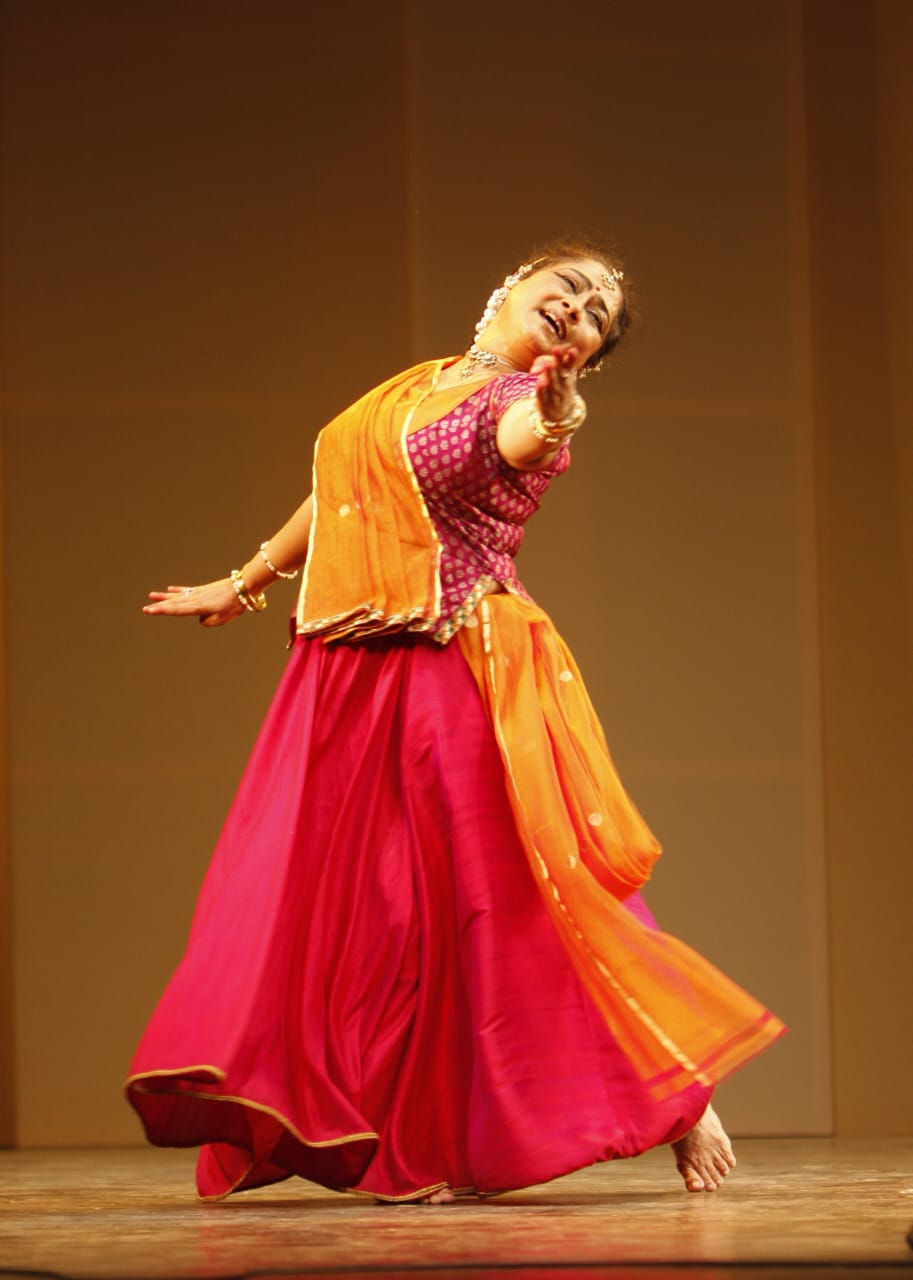
Taking Kathak to the global stage was never merely about 'teaching dance'; it was a profound exercise in translating a culture. My journey across England, Dubai, and Switzerland unfolded in distinct phases, each presenting a new layer of difficulty that eventually became my most significant teacher. As a dancer in her 20s in England, my primary hurdle was recognition and legitimacy. Despite my training and accolades acquired back home, garnering credibility within a Western educational system was not easy. I realized that just to be acknowledged, I would have to prove that our traditional form held the same structural and intellectual weight as any Western classical form. This meant designing an entire syllabus from the ground up, formulated in strict alignment with the principles of the Natya Shastra. By engaging with universities and patrons of the arts through a newly constructed academic framework, I, with a team of dancers, succeeded in establishing Kathak as a formal, rigorous discipline. When I moved to the Middle East in my 30s, the challenge became deeper: it wasn’t about credibility any more, it was about a lack of context: the absence of an ecosystem. Dubai presented a landscape with immense enthusiasm for art but no formal infrastructure for pedagogy-driven dance education. This lack of infrastructure was even more apparent in the context of women-led initiatives. This absence became both a challenge and an opportunity. I had to work closely with regulatory bodies to license an institute where none existed. Eventually Gurukul Dubai was born. In a landscape where traditional idols were not permitted on stage or studios, I had to find new ways to invoke the sacred energies. No longer just a dancer; I had become a storyteller and ambassador, building a space that has now reached thousands of students. By the time I was in my 40s, I had reached Switzerland, and the challenge had matured into communication and transmission. Language barriers forced me to rethink my entire praxis. I had to find new ways of connecting: through interpreters and by training local teachers, thereby ensuring the essence of Kathak wasn’t lost in translation. I realized that while audiences could see the Chakkars (spins) and hear the Ghungroos (bells), the spiritual depth of Abhinaya required a bridge of 'understanding.' A bridge I built by recreating the entire spectrum of human emotion through Kathak by comprehensively elucidating the depth of the Gita Govinda – an eternal story of love, separation and union. It reinforced that my role was more than just delivering lessons, it was to forge connections on a human level. Across all three phases, the one constant has been my commitment to remaining a student myself. By engaging with other cultures through learning their dance forms, I deepened my own practice. I realized that while my movement vocabulary remains rooted in the tradition of Kathak, my perspective must be global.
These hindrances were never 'stoppers'; they were my greatest teachers. They forced me to refine my pedagogy, leading to the creation of what I now share in my upcoming book: The Complete Works of Kathak. This journey taught me that while the language of dance is universal, its nuances are deeply rooted in culture and it must be gently unfolded for each audience. We are not just practitioners; we are the bridges between worlds.
Your online courses, which you offer through your social media handles and other websites are seemingly gaining higher value and acceptance. How do you perceive online training when compared to the Guru Shishya Parampara tradition?
For me, online training and the Guru Shishya Parampara are not opposing systems, they are complementary. Wherever I have lived, my foundation has always been to establish a Guru Shishya parampara. This immersive, in-person transmission is essential for shaping a complete dancer, as it carries not just technique, but samskaar, discipline, and artistic depth. Online training, on the other hand, serves a different but equally meaningful purpose. The digital platforms have enabled equal access to knowledge, for a student in a remote village or a global metropolis. Since I first began exploring this space in 2005, my intention has been twofold: to stay connected with students and communities I had moved away from, and to reach those who may have felt disconnected from their own training, offering them a way to revisit it, reconnect with it, and stay inspired. The heart of our tradition is built on Spanda—the living vibration and energy exchange that occurs only in the physical presence of a Guru. Online training can teach you the 'how,' but the 'why'—the subtle emotional shifts (Bhaav) and the spiritual grounding—requires the physical presence of a mentor. One can learn the alphabet online, but one learns the language of the soul in the presence of the Guru. Online training is not a means to create 'complete' dancers; rather, it is the Research and Foundation phase. It builds stamina and aligns technique so that when a student eventually stands before me for residential training or an intensive workshop, we don't have to spend time on certain basics. We can move forward and focus on the deeper work of Ang Shuddhi (purity of form) and the process of creation of Rasa. I don’t see technology as a replacement for the Guru, in fact, for me it is a medium that extends the Guru’s reach and creates pathways for supplementing knowledge.

Your meticulous training emphasises the use of techniques and understanding the Sashtra. How important do you rate theory and understanding the shastra for a performing dancer?
For me, the Shastra is the very root of the practice. Technique can only truly flourish when it is deeply understood, nurtured, and grounded in this foundation. Without that understanding, one may practice movements incorrectly, even risking physical harm. The safety of the dancer is paramount, and that begins with awareness—knowing what one is doing and why. Dance does not begin in the body; it begins in the mind. When the mind is aligned and informed, the body naturally follows with clarity and precision. From the very beginning, I’ve believed in the principle of prevention of injury over correction—because a healthy mind ensures a healthy body. A dancer can mimic a movement perfectly through sheer repetition, but without Shastra, they remain merely a technician. Treatises like the Natyashastra or Abhinaya Darpana provide the 'Why' behind the 'How.' When you understand why a specific Drishti (eye movement) must follow a Hasta (hand gesture), your performance gains cognitive depth. It transforms from a display of physical performance into a meaningful act of expressive communication. Our responsibility as dancers is to hold the art form in its purest state. while building bridges to the future. Unless one understands the theory behind his/her work, one cannot expect to effectively communicate the message through technique. That is why, in all my institutes and even in my online training, the theory is considered as important as the action. Students are encouraged to engage with definitions, notation, the structure of raga, and the syllables of tala. This is not supplementary; it is essential. Theory allows a dancer to internalize the structure so thoroughly that they eventually become free within it. Shastra is the root; technique is the blossom. When the root is deep and nurtured, the art in the artist is firmly established. True 'Freedom' on stage only comes when the 'Form' is so well-understood that it becomes second nature.
In my book: The Complete Works of Kathak, I have leveraged the best of both the worlds: While the book is a reservoir of traditional knowledge which is written in easy language , it is supplemented with use of technology to create a digital resource of practice videos which are accessible through QR codes in the book.

Given the inevitability of aging, how does a maturing dancer manage the demands of the art form?
My approach to sustaining a dance career over time has been deeply shaped by my early experiences. As a young dancer, I witnessed my gurus face physical setbacks: one due to a paralytic condition brought on by negligence, and another who was unable to continue dancing after pregnancy. These moments stayed with me and instilled a lifelong awareness that the body cannot be taken for granted. It became clear to me that physical fitness was, and is, even more urgent than the immediate pursuit of aesthetics. Physiologically, the body is in a constant state of change. Recognizing this, I’ve learned to adapt by paying close attention to diet, rest, recovery, and healing. Cross-training through yoga, Pilates, swimming, and other physical disciplines has been essential in building stamina and resilience. I have also learned immensely from observing others. By watching how dancers prepare before performances and, just as importantly, how they cool down afterwards, a phase where injuries often occur due to fatigue. Over the years, I’ve understood that both the body and the mind must be strengthened with equal commitment. While the body requires riyaaz, conditioning, and care, the mind demands continuous engagement. Research, reading, conferences, dialogue, and critical reflection have helped me navigate not only the artistic demands of dance, but also the psychological challenges that come with it. Touring brought its own complexities. The changes in climate, food, time zones, and cultural environments forced me to constantly assess whether to push forward or to preserve energy, learning to maintain the integrity of performance while respecting the limitations of the body. I’ve had to ask for help when needed, learn to say no, and, most importantly, listen to what the body says. This awareness allowed me to return to performance even after major life events, including childbirth, accidents, and menopause, with care and responsibility. Regular medical check-ups, appropriate nutrition, and supplementation have become parts of my routine. Equally important was tending to my mental and emotional health. I’ve consulted therapists, physiotherapists, and psychologists whenever necessary, and maintain open and honest communication with those around me with my best interests at heart. Sustaining a career in dance also requires practical awareness. An understanding of funding and resource management create stability and mental peace. Over time, I’ve realised that longevity in dance is not accidental; it is a result of conscious, informed, and compassionate choices. A dancer must evolve from simply performing to understanding, managing, and nurturing the self, so that the art can continue to live through them.



Comments