
Beyond the White Face: The True Geisha
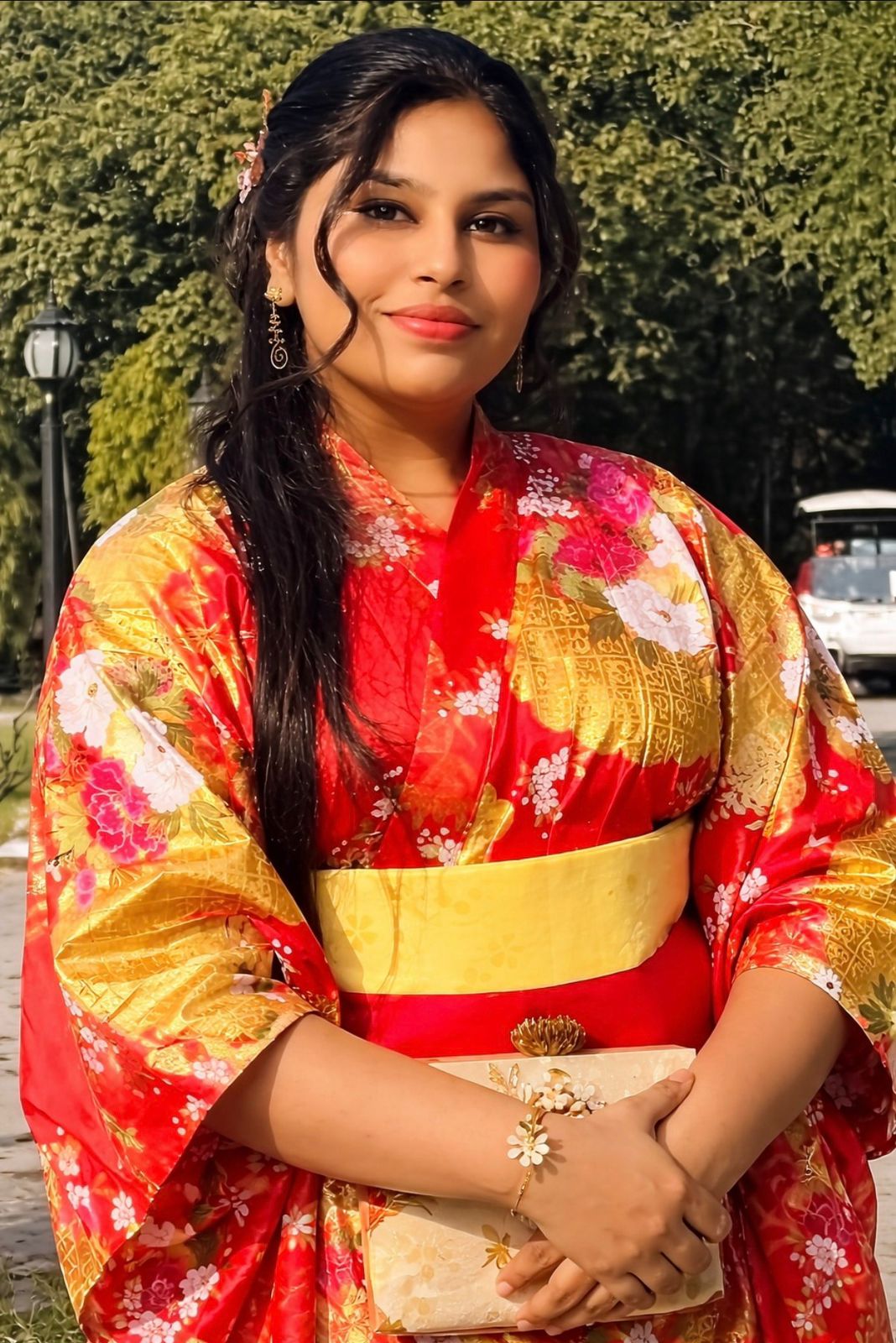
In the lantern lit quarters of Kyoto, where shadows linger like half remembered dreams, a figure moves with such deliberate grace that time itself seems to pause in reverence. She is often seen yet rarely understood. The geisha, an enduring emblem of Japanese culture, exists somewhere between art and illusion, reality and projection. To encounter a geisha is not merely to witness a performer, but to step briefly into a world shaped by discipline, tradition, and a quiet, unwavering devotion to beauty.
The word geisha (芸者) translates simply as “person of the arts.” Yet within this modest definition lies a complexity that resists easy interpretation. For centuries, geisha have been custodians of refined entertainment, trained in music, dance, poetry, and conversation. Their purpose has never been rooted in the crude simplifications often imposed by the outside world, but rather in the cultivation of an atmosphere where elegance reigns and every gesture carries meaning.

It is necessary, perhaps, to begin by unravelling the most persistent misconception. Popular imagination, especially in the West, has too often reduced geisha to figures of exotic intrigue, conflating them with courtesans. This misunderstanding, shaped by history and misrepresentation, obscures the truth of their role. A geisha is not defined by physical intimacy but by artistry. She is, above all, a performer whose stage is the intimate gathering, whose audience may be a handful of guests seated upon tatami mats, listening as a shamisen hums softly through the room.
To become a geisha is to surrender oneself to years of rigorous training. The journey begins as a maiko (舞 妓), an apprentice whose appearance is both striking and symbolic. Her elaborate kimono trails behind her like a whispered promise, its colours vibrant, its patterns seasonal. Her face, painted in white, becomes a canvas upon which tradition is carefully inscribed. Yet beneath this beauty lies discipline of the most exacting kind.
A young maiko must master the shamisen, a three stringed instrument whose melancholic notes echo through the narrow streets of Gion. She learns traditional dances, each movement precise and laden with cultural memory. Even the act of pouring tea is elevated into a form of art, governed by etiquette and intention. Language, too, becomes a tool of refinement. Conversation must be engaging yet measured, witty yet respectful. It is said that a true geisha can make her guest feel as though he is the most important person in the world, if only for an evening.
Consider, for instance, the celebrated geisha Iwasaki Mineko, whose life offers a rare glimpse into this hidden world. Renowned for her exceptional talent, she became one of the most successful geisha of her time. Her memoir reveals a life defined not by indulgence but by relentless practice and unwavering commitment. She speaks of long hours spent perfecting a single dance, of the physical strain concealed beneath an outward serenity. Through her story, one begins to understand that the elegance of a geisha is not innate but meticulously crafted.
The setting in which geisha operate is equally significant. The hanamachi, or “flower towns,” such as Gion in Kyoto, are spaces where tradition is preserved with almost reverential care. Wooden machiya houses line the streets, their lattice windows filtering the glow of lanterns. Within these establishments, known as ochaya, guests are welcomed into a realm that feels untouched by the passage of time. Here, the modern world recedes, and the rhythms of an older Japan take precedence.
An evening with a geisha is an orchestration of subtle pleasures. There may be music, perhaps the gentle plucking of the shamisen, accompanied by a song whose lyrics evoke fleeting seasons or distant landscapes. There may be dance, where each movement is restrained yet expressive, suggesting rather than declaring emotion. There is also conversation, a delicate interplay of humour and insight, where silence is valued as highly as speech.
In one often recounted anecdote, a guest once asked a geisha why she moved so slowly. She replied that haste would betray the essence of her art. “To move quickly,” she is said to have explained, “is to forget the space between moments.” Such a philosophy reflects a broader aesthetic deeply embedded within Japanese culture, where the beauty of an experience often lies in its transience.

This notion finds resonance in the concept of mono no aware (物の哀れ), a sensitivity to the ephemeral nature of things. The geisha, in her performance, embodies this awareness. Her dance may last only a few minutes, her song may fade as quickly as it begins, yet within these brief intervals lies a depth of emotion that lingers long after the moment has passed. It is an art form that does not seek permanence but cherishes impermanence.
Yet the world of the geisha is not immune to change. In modern Japan, their numbers have declined significantly, and their presence has become increasingly rare. The demands of contemporary life, coupled with the rigorous nature of geisha training, have made it difficult for this tradition to sustain itself. Nevertheless, efforts are being made to preserve it. Cultural institutions and local communities continue to support the hanamachi, recognising the geisha as an invaluable part of Japan’s intangible heritage.
At the same time, the geisha has found new forms of visibility. Tourists flock to Kyoto in the hope of catching a glimpse of a maiko walking swiftly through the streets, her wooden sandals echoing against the pavement. Photographs circulate widely, capturing moments that are often stripped of their deeper context. While such attention brings awareness, it also risks reducing the geisha once more to a spectacle, detached from the discipline and artistry that define her existence.
There is, then, a delicate balance to be maintained. To appreciate the geisha is to look beyond the surface, to recognise the years of training concealed beneath the elegance, and to understand the cultural framework within which she operates. It is to see her not as a relic of the past, but as a living practitioner of an art that continues to evolve.
Perhaps the most compelling aspect of the geisha lies in her ability to create a sense of intimacy within a fleeting encounter. In a world increasingly characterised by speed and distraction, the geisha offers an alternative rhythm, one that values presence over urgency, nuance over excess. Her art reminds us that beauty often resides in the smallest of details, in the gentle curve of a hand, in the pause between notes, in the quiet exchange of words.
As the evening draws to a close and the lanterns begin to dim, the geisha departs as gracefully as she arrived. There is no grand farewell, no lingering spectacle. She leaves behind only the memory of a moment, carefully crafted yet seemingly effortless. It is a reminder that true artistry does not demand attention but invites contemplation.
In the end, to understand the geisha is not to unravel a mystery completely, but to accept that some aspects of her world are meant to remain elusive. She exists not as a myth to be dispelled, but as a testament to the enduring power of tradition, discipline, and the human capacity to transform the ordinary into something quietly extraordinary.
REFERENCES:
Iwasaki, Mineko. Geisha, A Life (Memoir providing first hand insight into geisha training and culture).
Dalby, Liza. Geisha (Anthropological study of geisha traditions and social role).
Downer, Lesley. Geisha, The Secret History of a Vanishing World (Historical perspective on geisha culture).
Cultural archives and documentation from Gion, Kyoto, Japan.


Comments